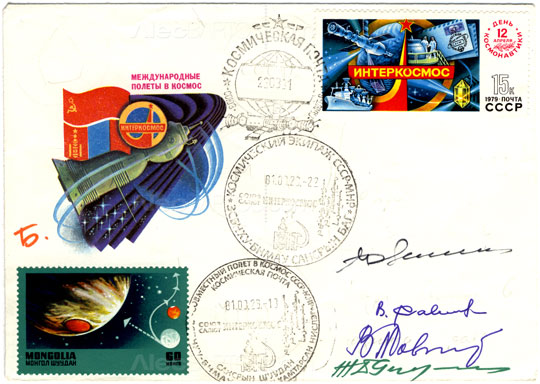
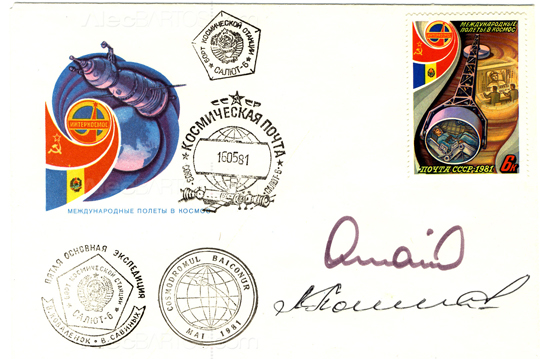
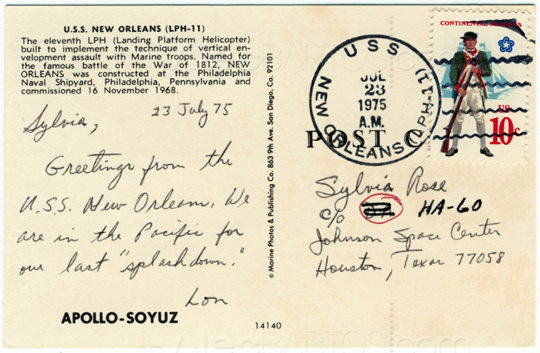
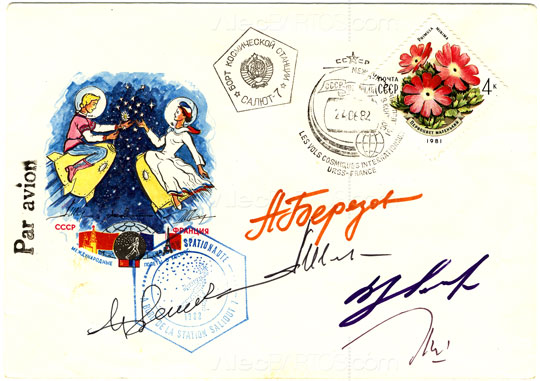
space cover cachets – handmade Alec Bartos

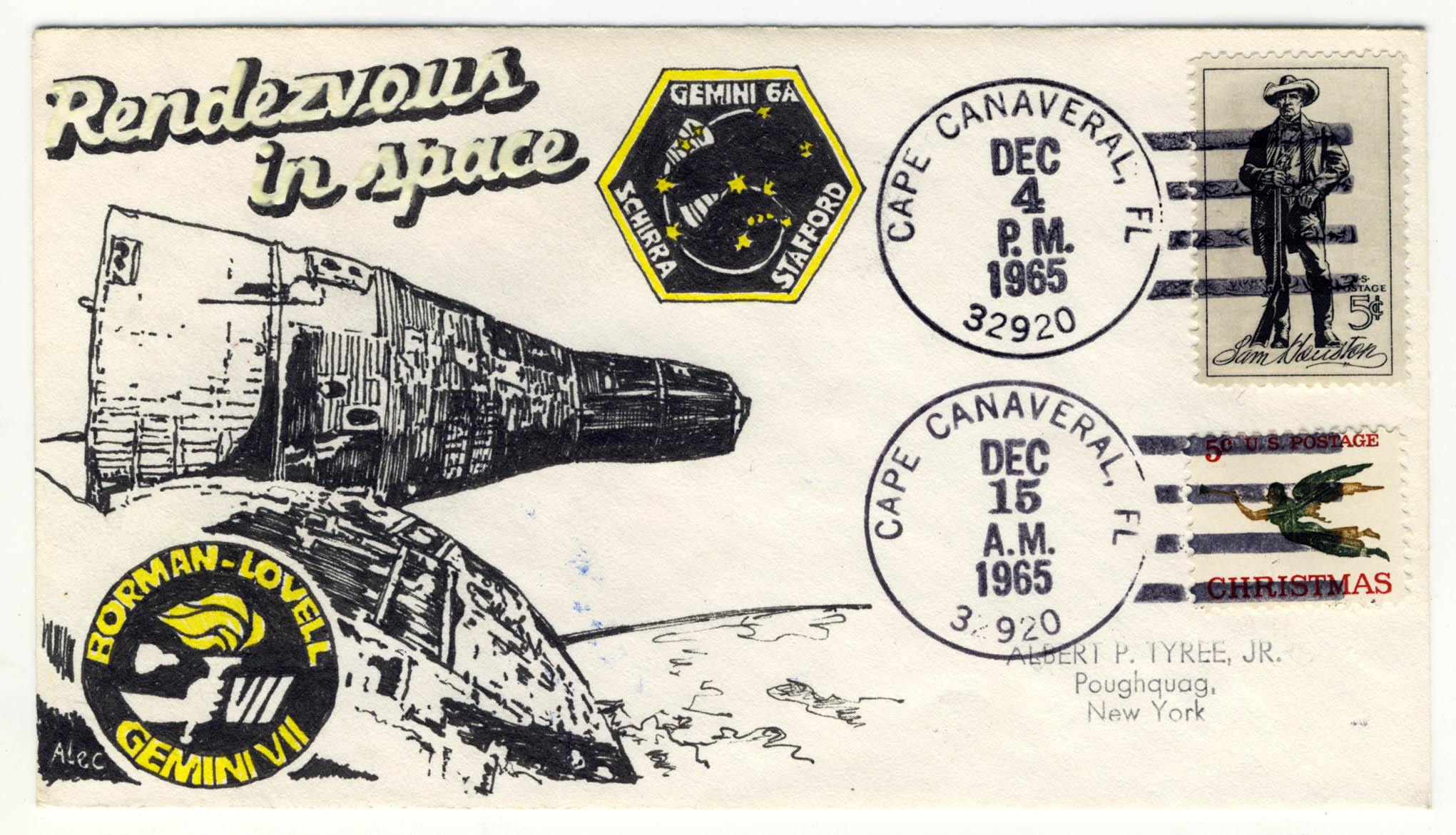
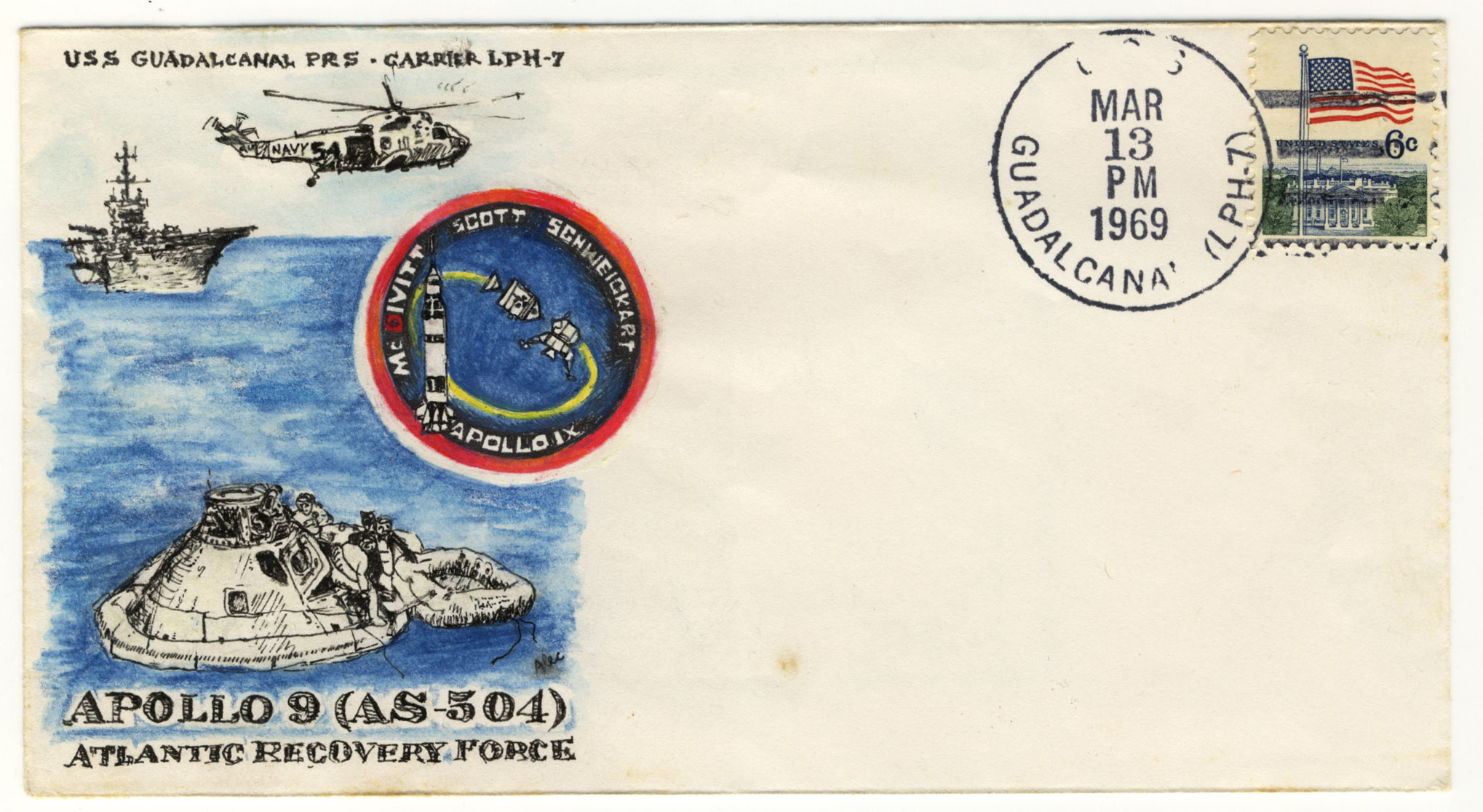
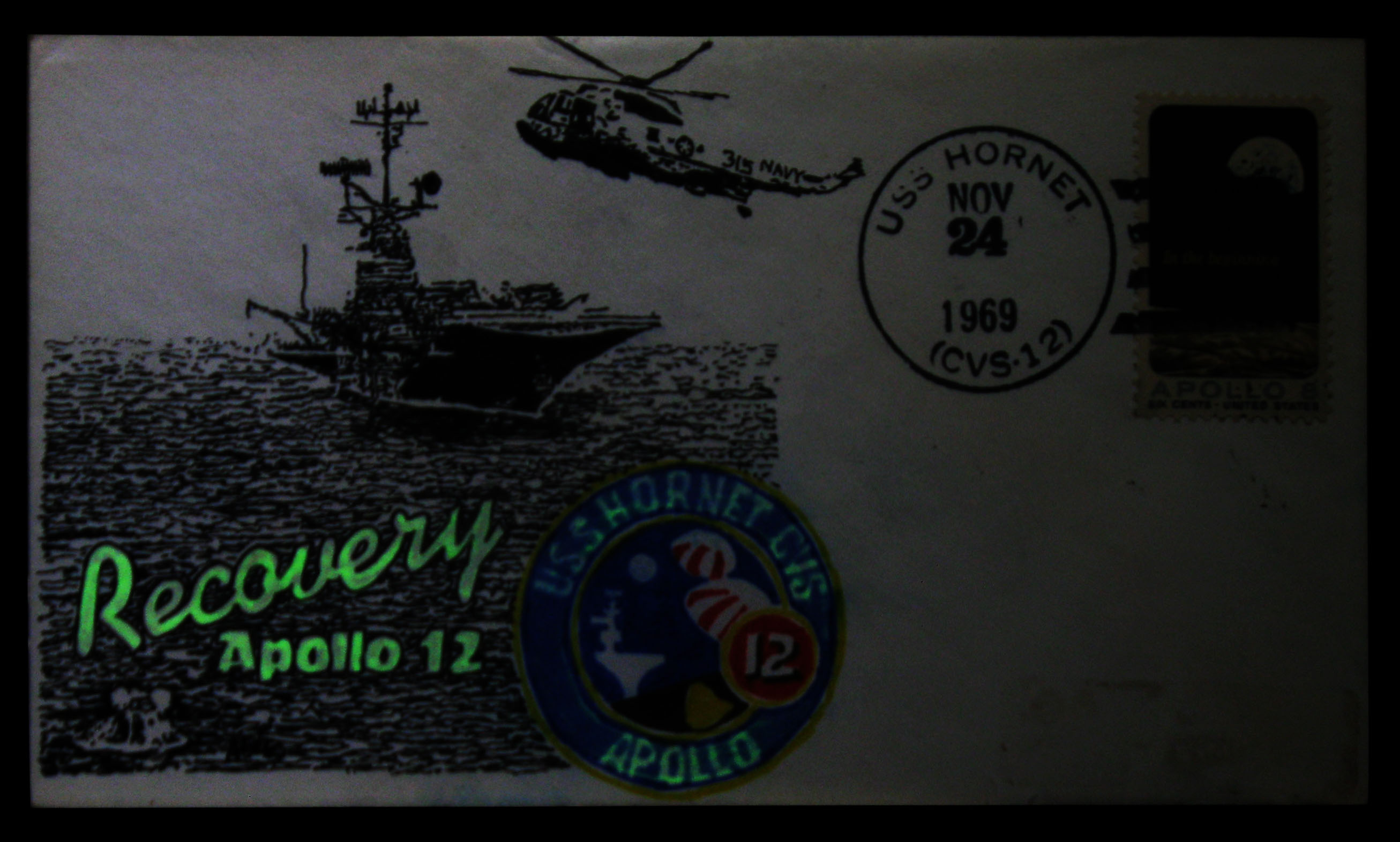
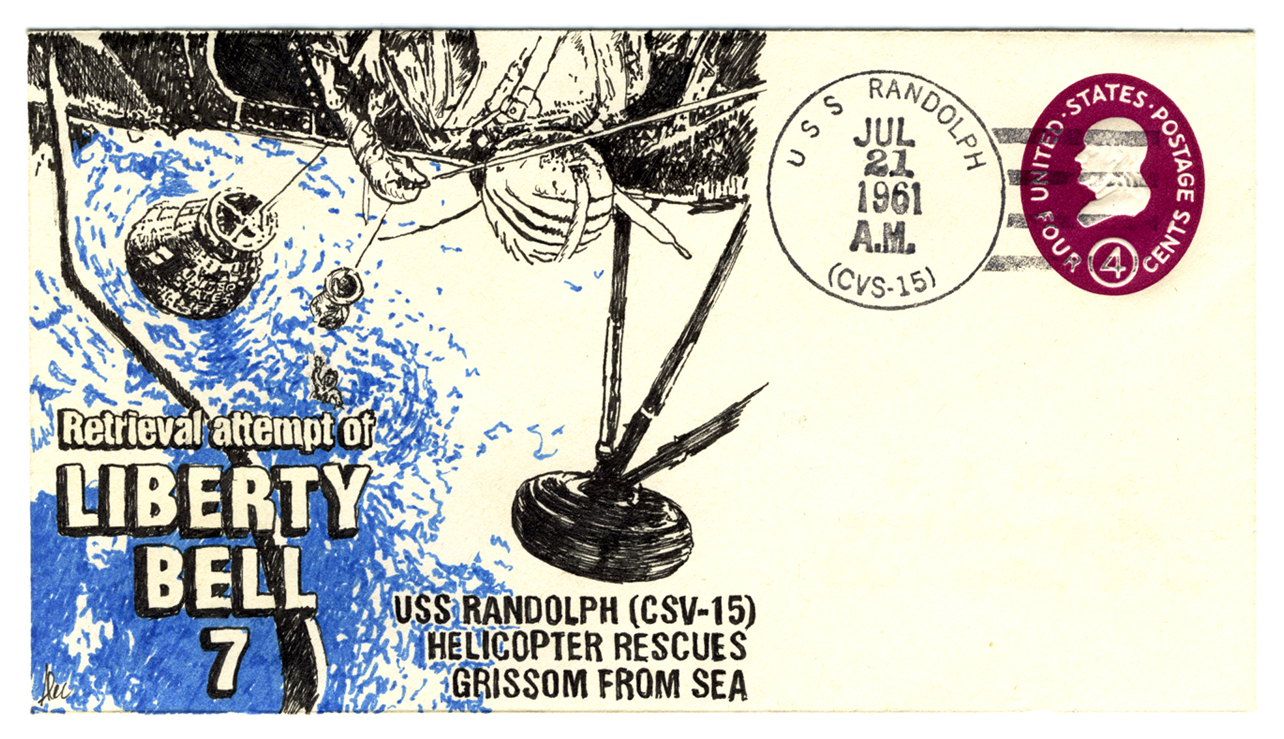
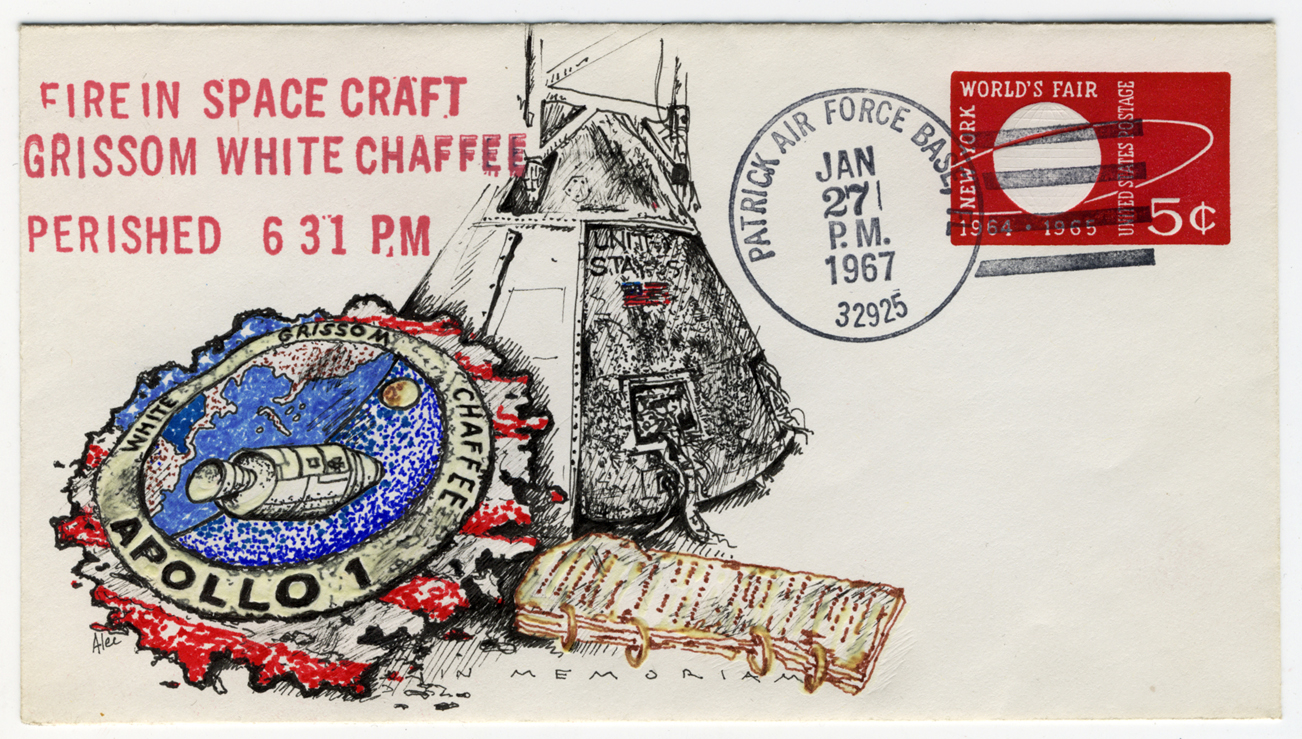
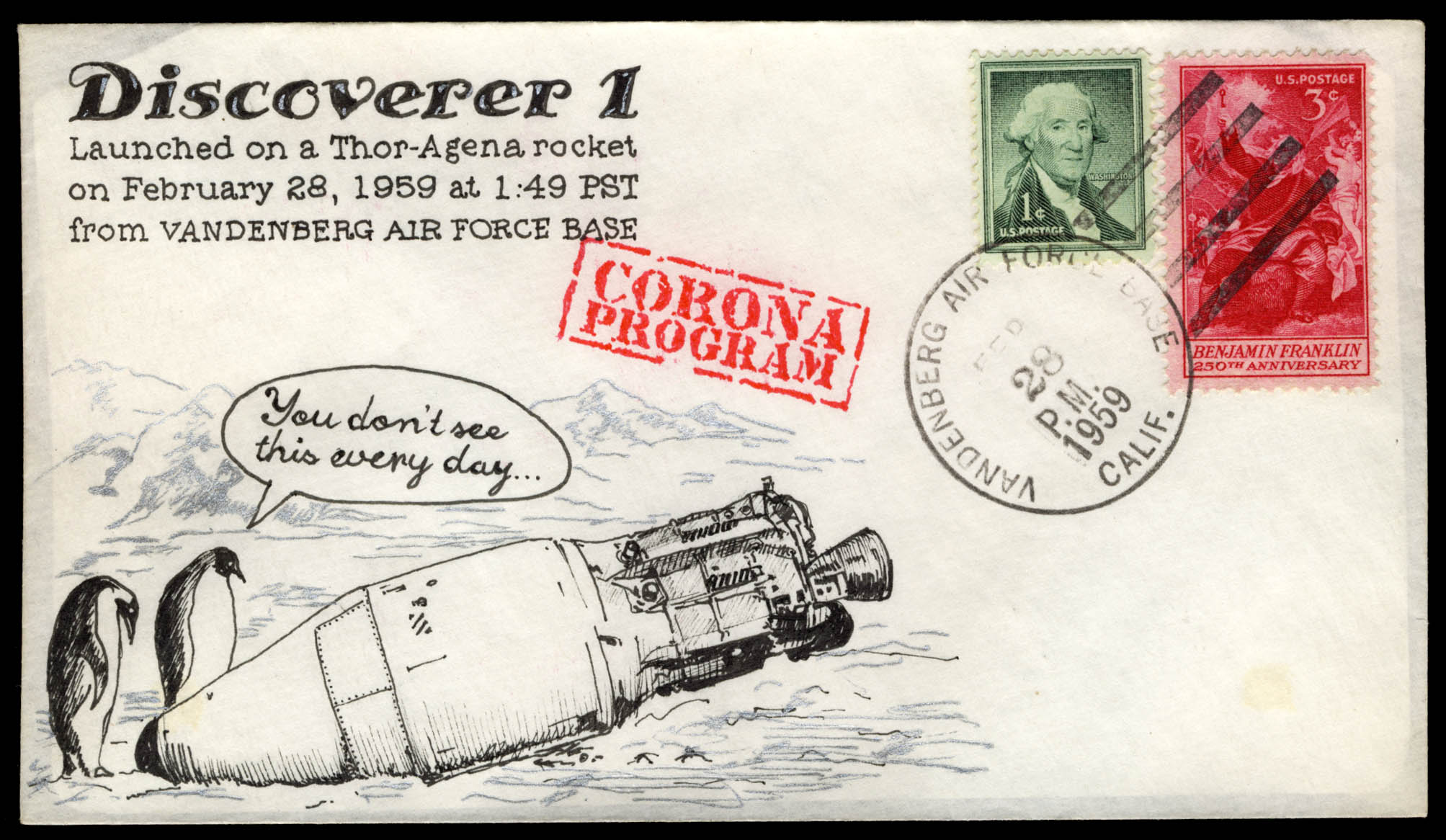
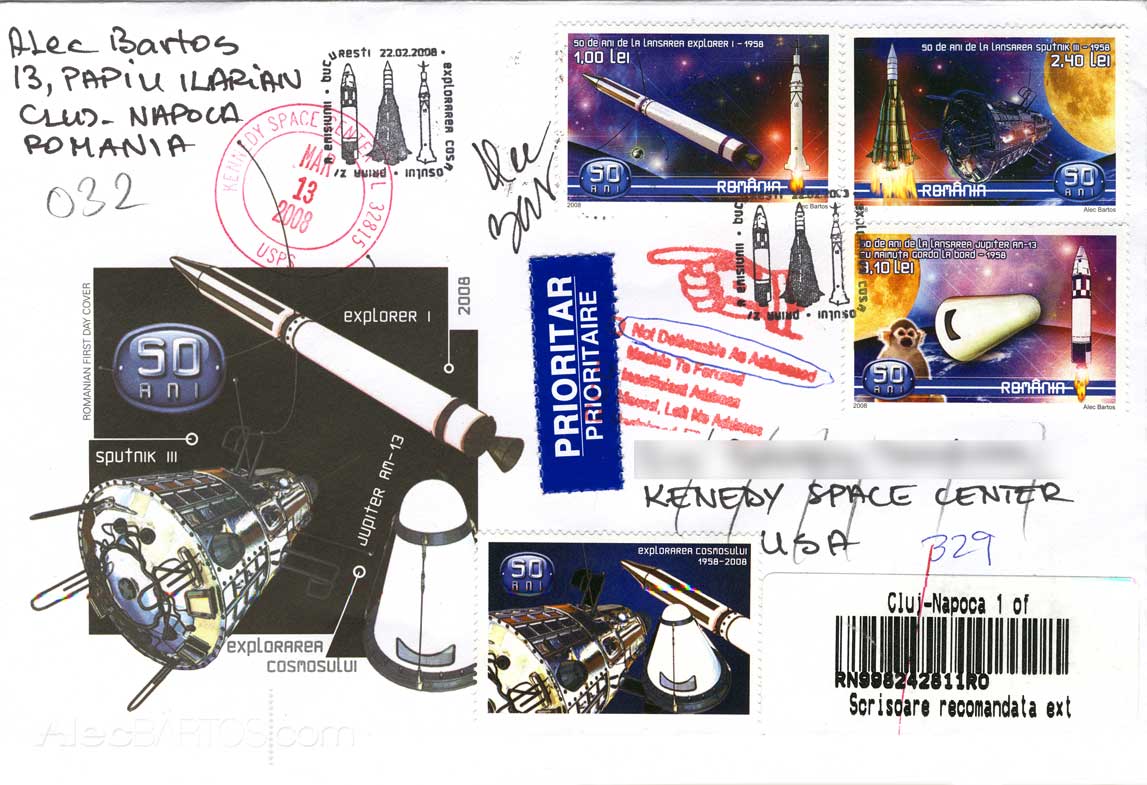
Cachet: In French, cachet means a stamp or a seal. On a cover, the cachet is an added design or text, often corresponding to the design of the postage stamp, the mailed journey of the cover, or some type of special event. Cachets appear on modern first-day covers, first-flight covers and special-event covers.

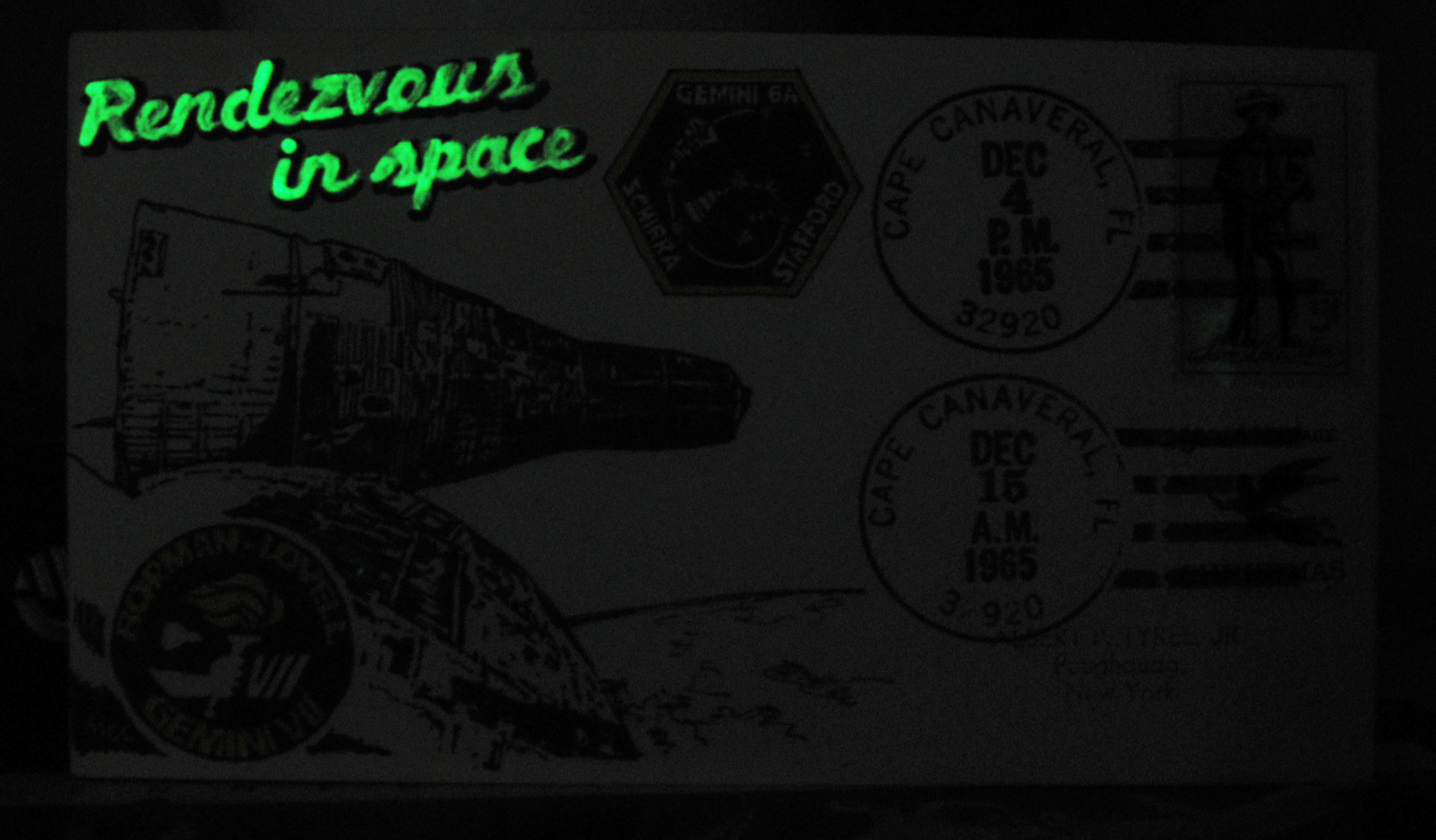
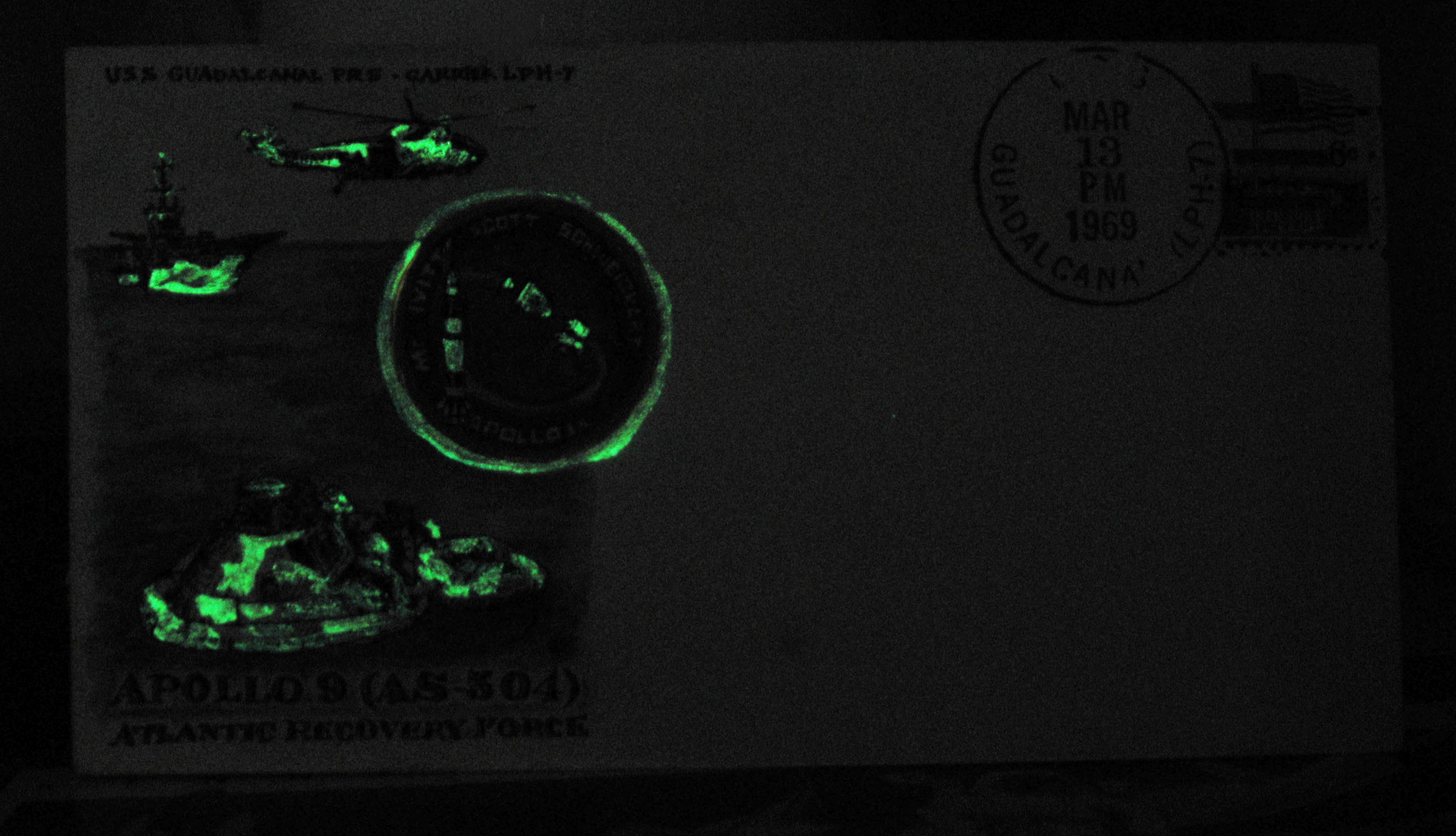
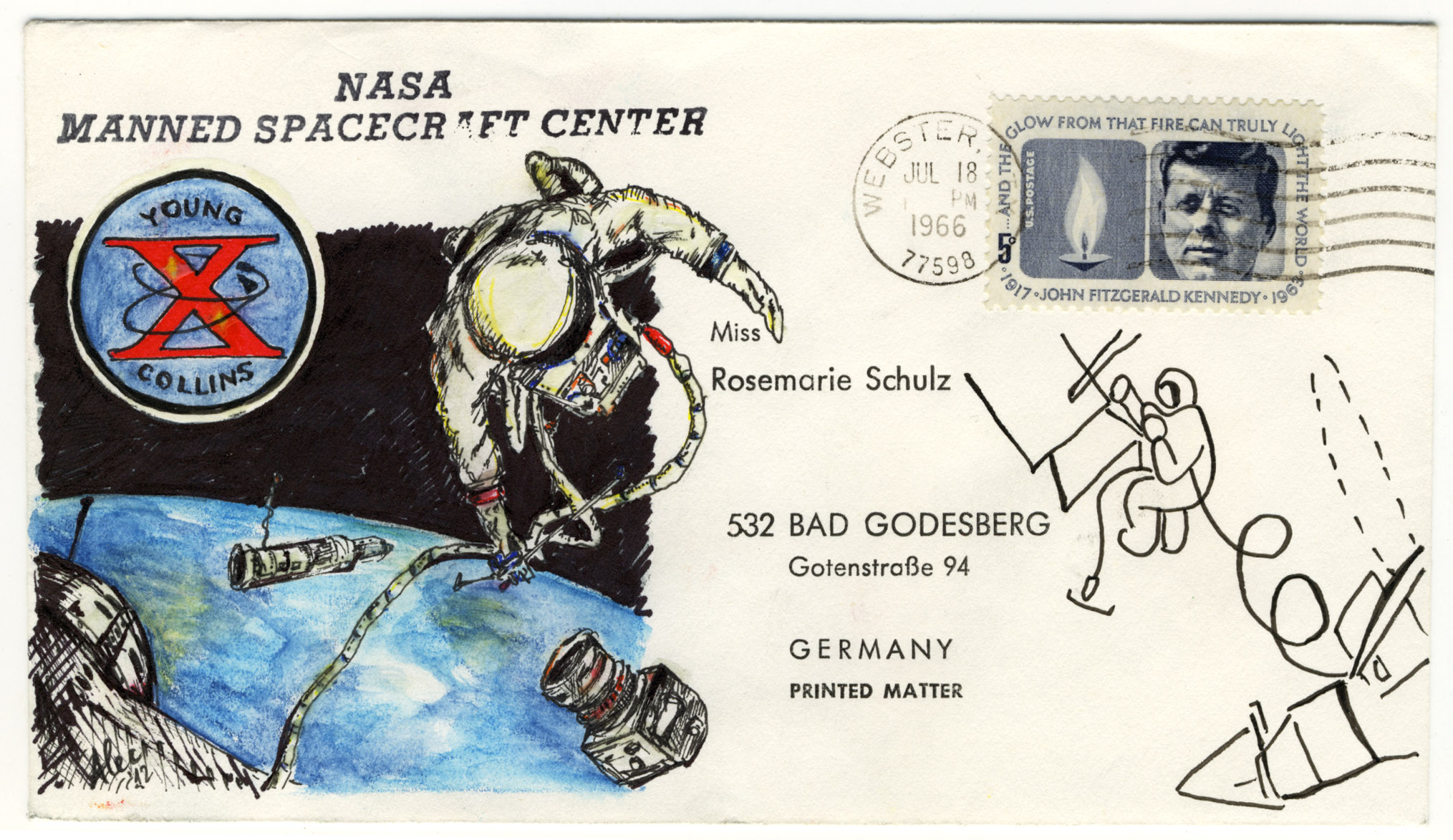
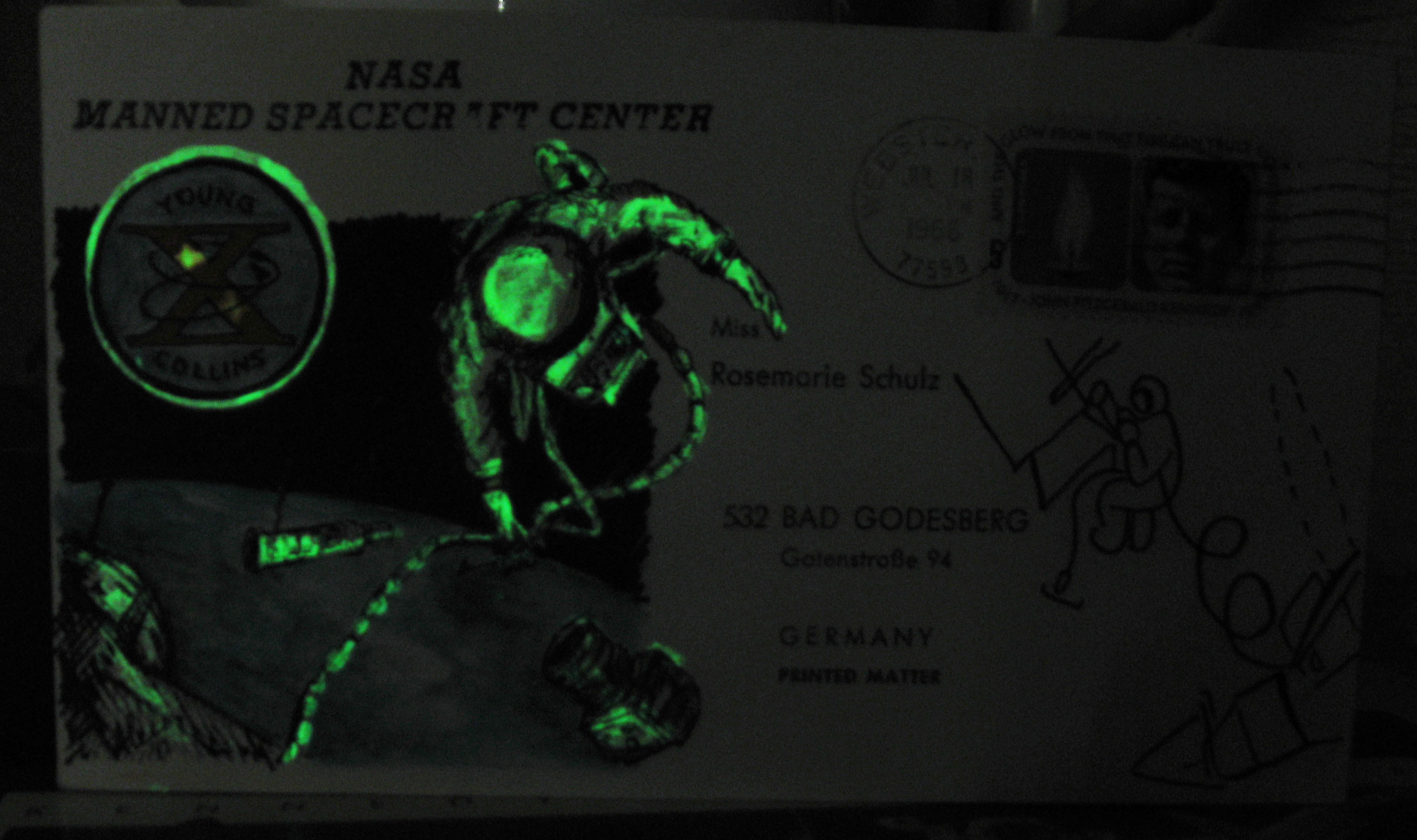
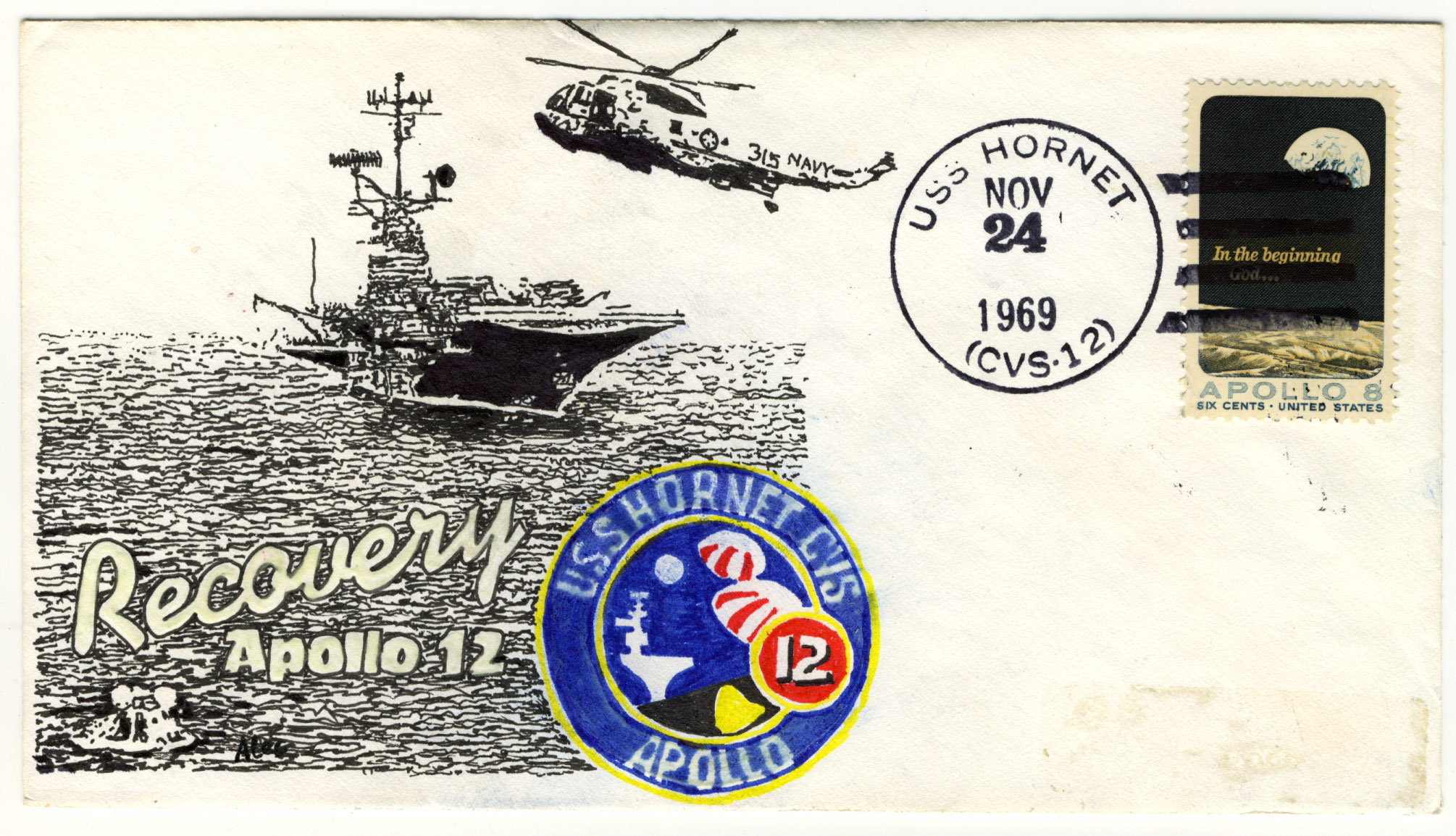
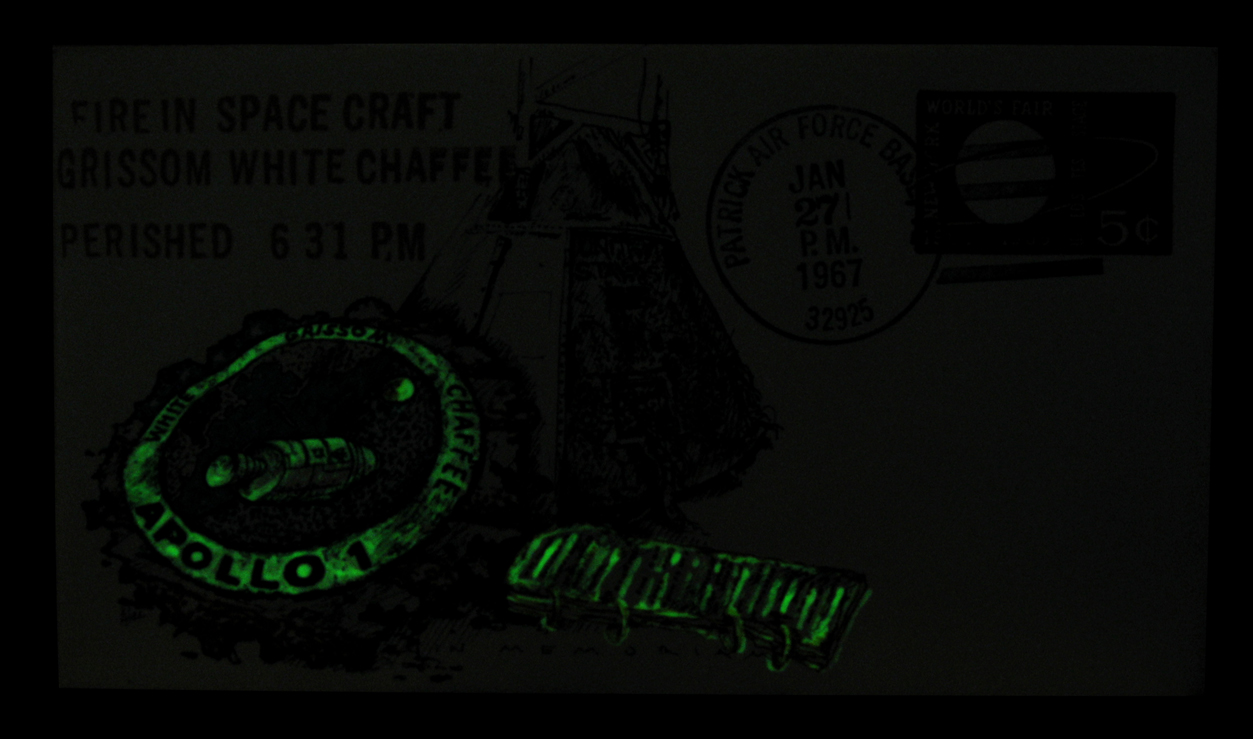
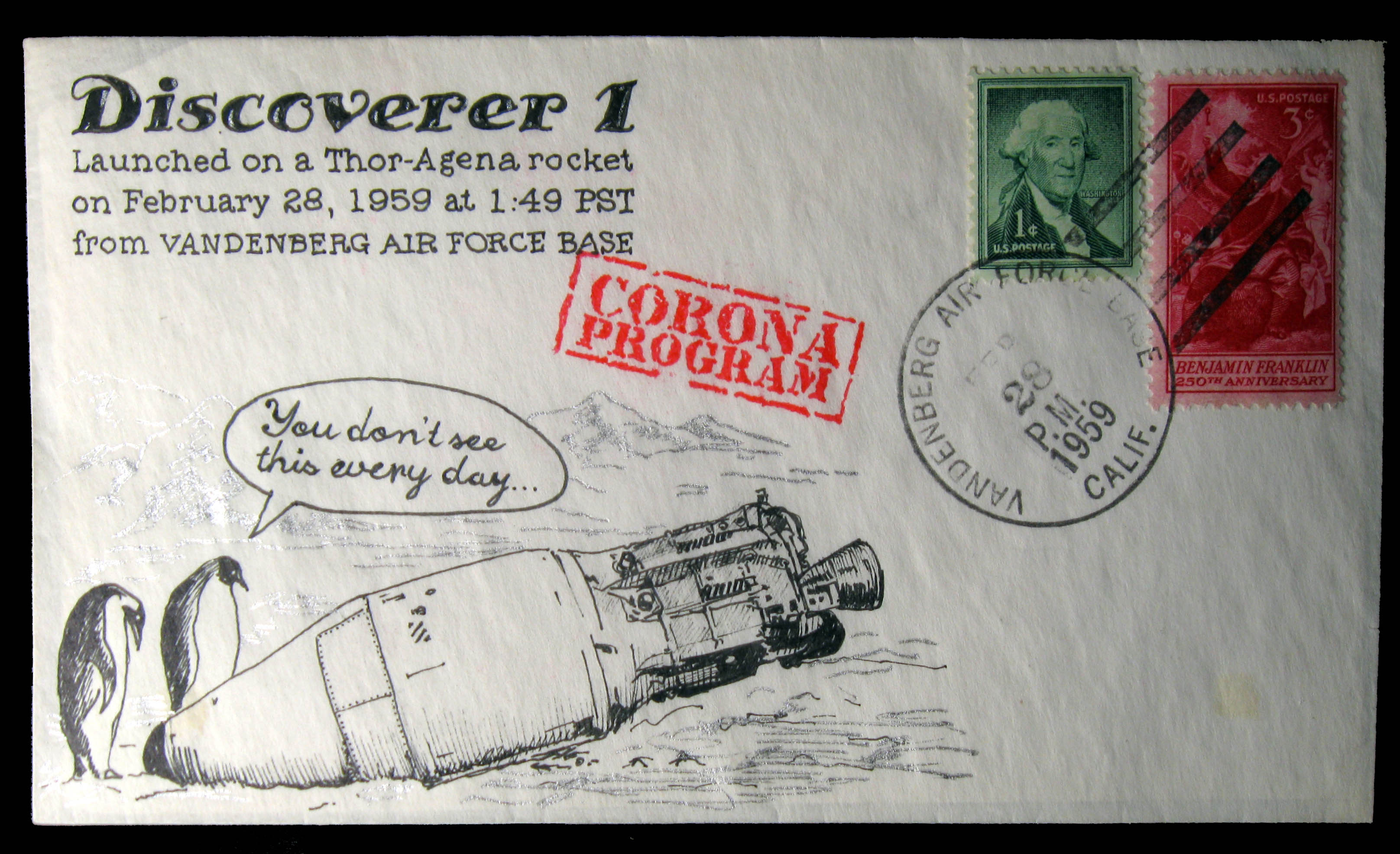
All the cachets are totally hand made, worked under the magnifying glass with nibs and brushes. Pigments used are inks and gouaches. In the darkness some features are photoluminiscent (glow in the dark pigments). The postmarks and stamps are originals from the respective period and places.  Actual covers size are approx. 16,5X9 cm (6,49X3,54 inch) For details please click the images.

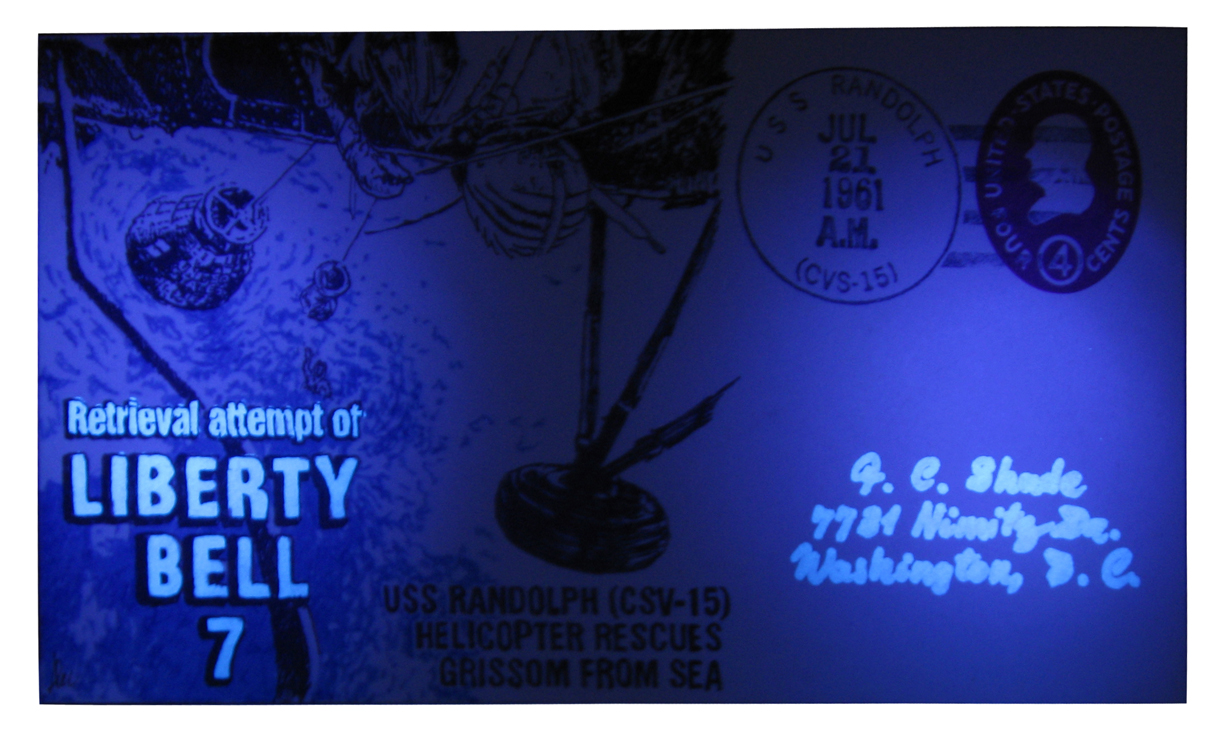
The Liberty Bell 7 cover has some features made with UV sensitive pigment. The cover bears a fake USS Randolph cancellation made by the famous forger Charles Riser. He was caught with the use of this kind of UV markings.

The Discoverer 1 – CORONA cover has silver paint effects. The cachet look different depending of the angle of  the light (Éclairage).

Don’t be shy – Drop a line – Use contact form

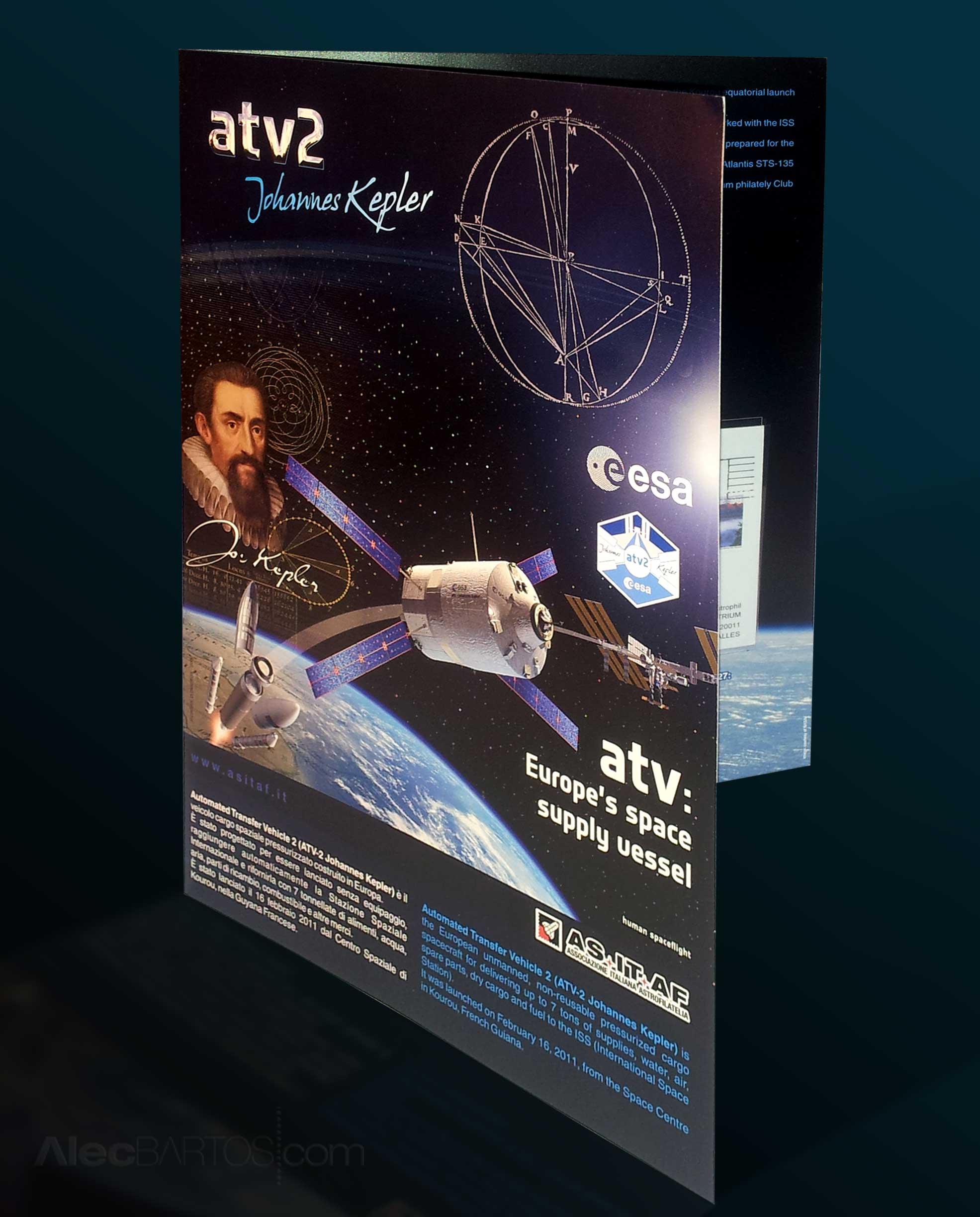
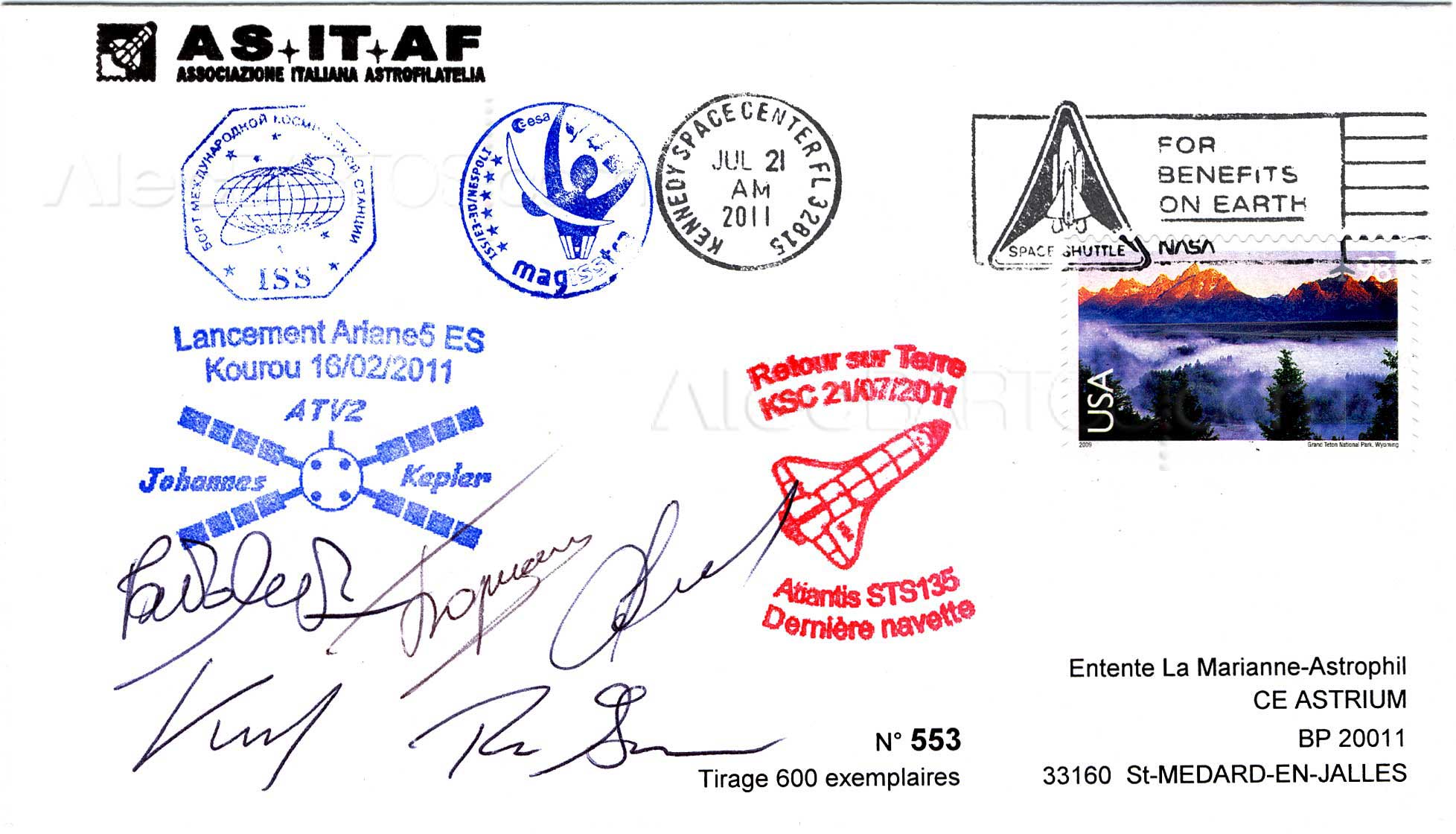
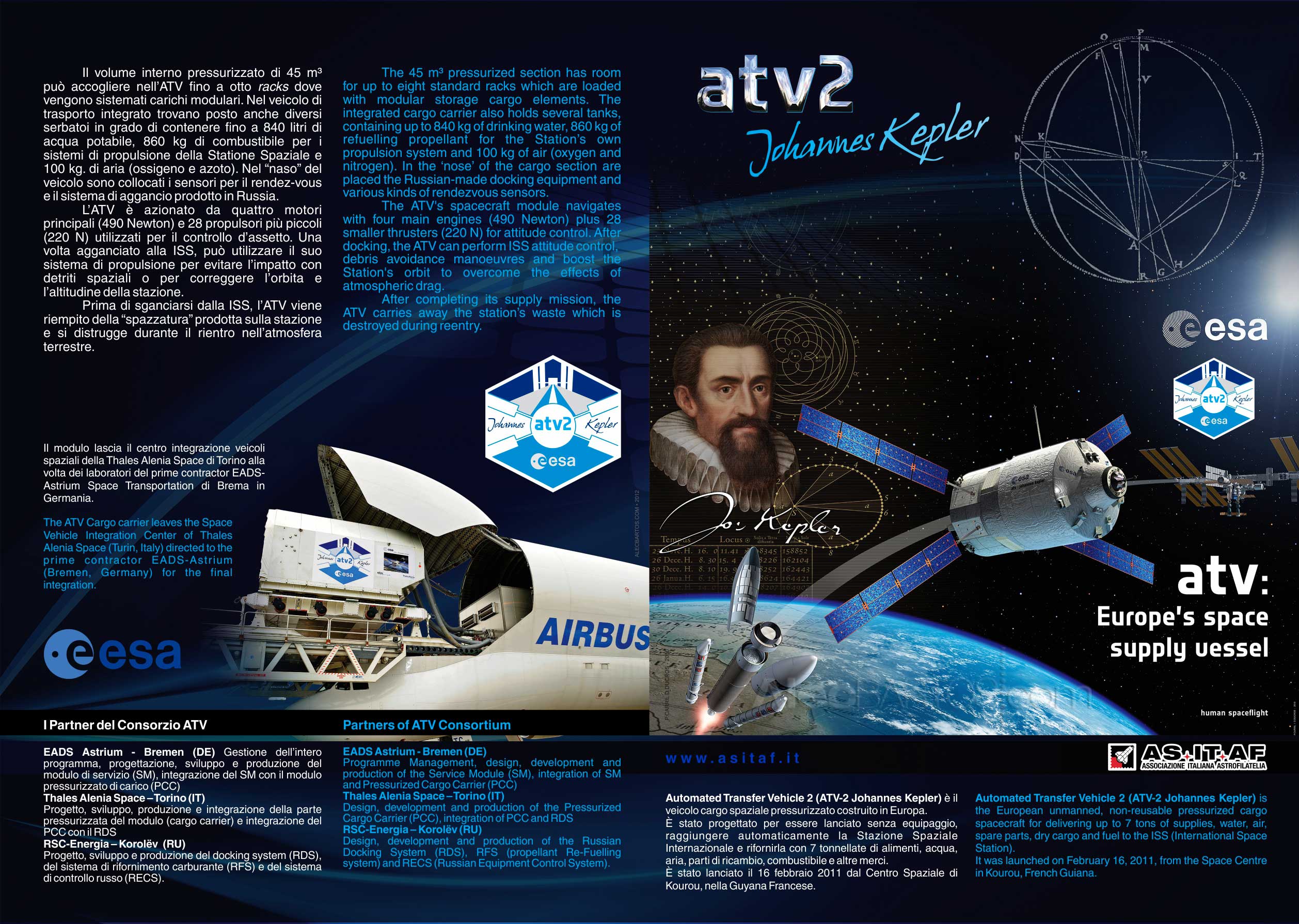
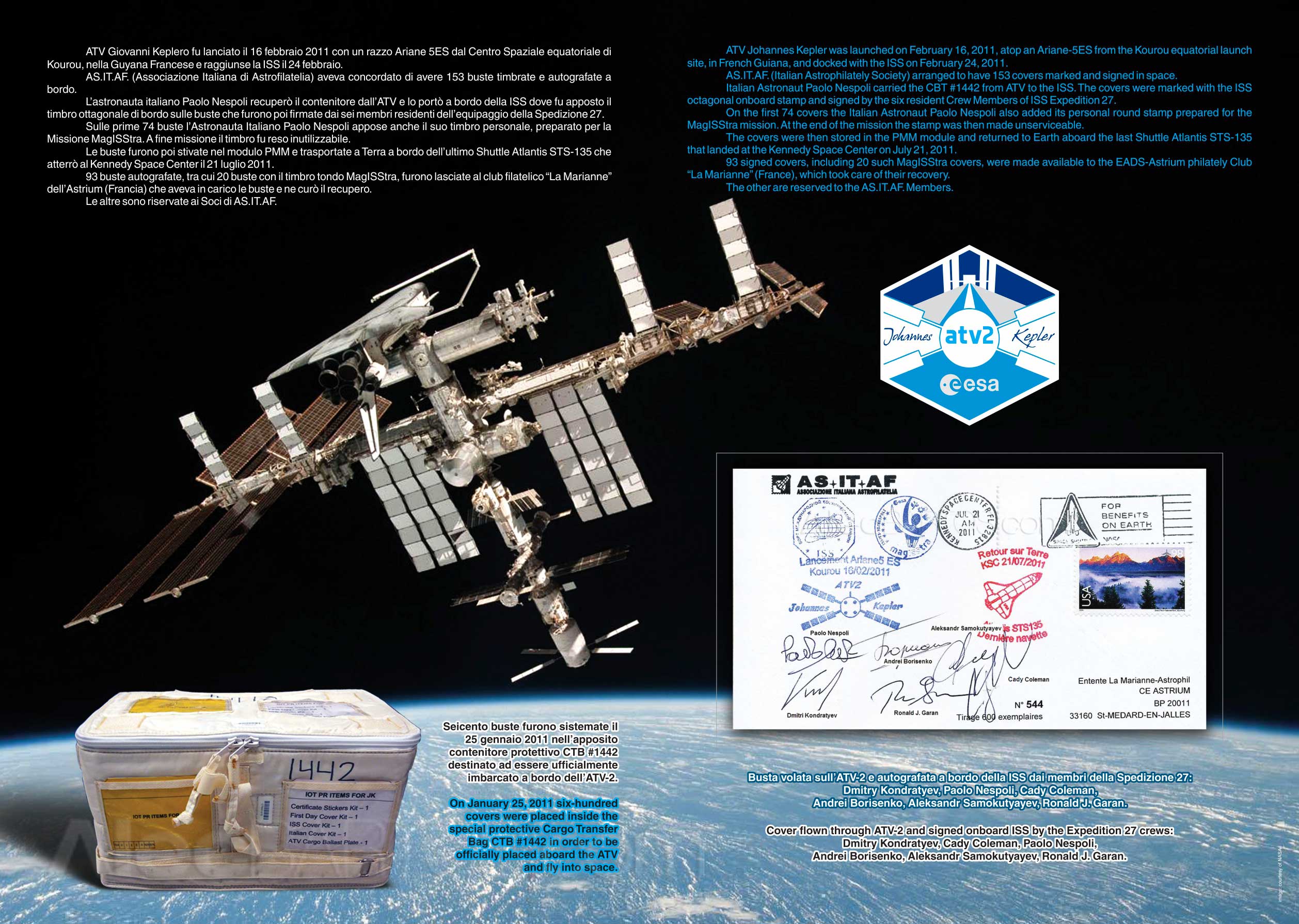
ATV-2 / MagISStra flown cover – Umberto Cavallaro – ASITAF AD*ASTRA N° 12 – March 2012

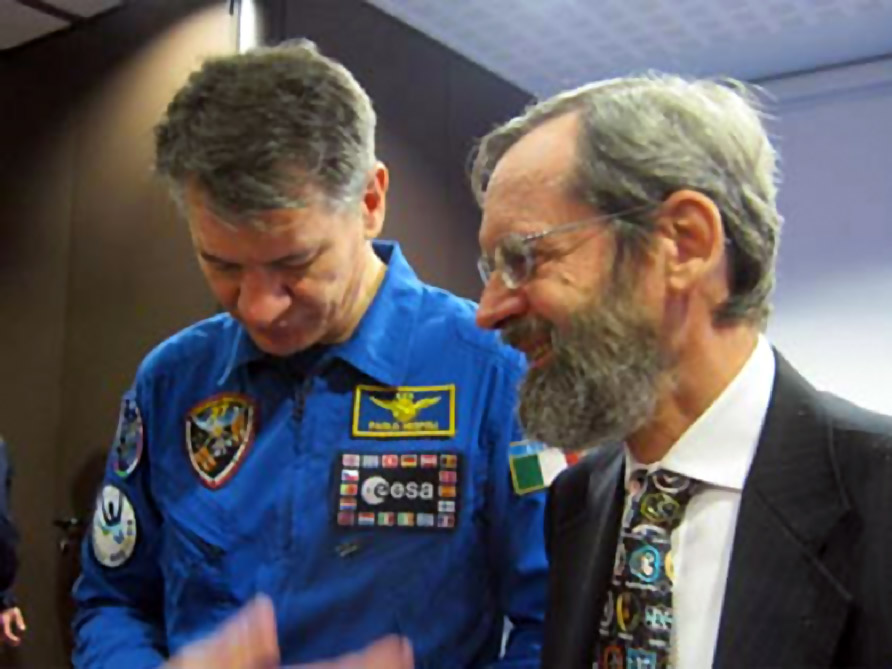
On February 28th we had the pleasure of presenting to the Italian astronaut Paolo Nespoli the folder containing one of the covers which ATV-2 carried last year to the ISS. Paolo Nespoli had personally recovered from the ATV the covers which were then signed by him and the by the other 5 members of the Expedition 26-27: Dmitry Kondratyev, Cady Coleman, Andrey Borisenko, Alexander Samokutyaev and Ron Garan.

Besides the ISS octagonal board “seal”, Nespoli also put on the cover his personal MagISStra hand stamp, which after the mission has been made unserviceable.

The AS.IT.AF. flown and signed cover is presented in an elegant folder designed by the Artist Alec Bartos and is reserved for the AS.IT.AF. Members only.  http://www.asitaf.it

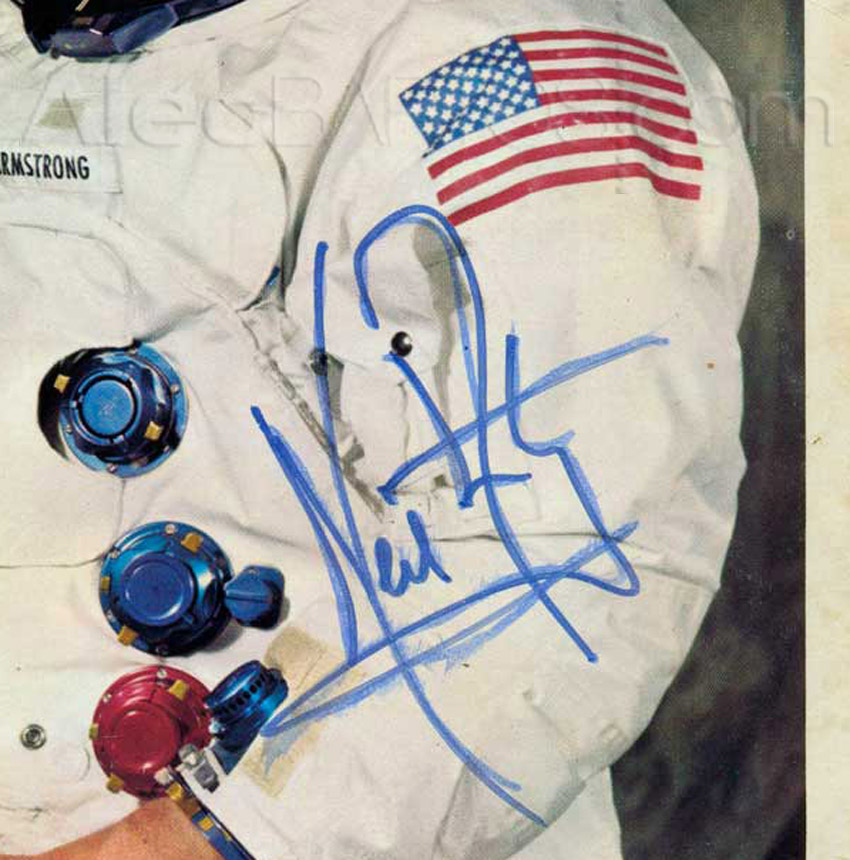
Official NASA WSS litho portrait of Neil Armstrong – Signed twice adventure

Received from a friend several days ago in an email, this Armstrong signed picture story goes like this:

“In 1971, a boy living in a village from the Transylvanian Plane, wishing to differ from his schoolmates, who were collecting autographs from Elvis-like celebrities, sent a letter to NASA asking for the autograph of Neil Armstrong. In 1991 the signed photo ends up in a primary school classroom where a pupil rewrites the signature in water-marker over the original one.”

ROMANIAN PHILATELIC SUPERLATIVES OF 2011

As at the end of each year, at the last meeting of the National Philatelic Commission a topic on the agenda was choosing the most beautiful postage stamps issue of 2011 and postage stamp which will represent Romania at international competitions in 2012.

Considering the artistic conception of the design, their originality and personalization, the harmonization of colors and the correlation with printer requirements, following the proposals from the Commission members, were agreed the following postage stamps issues:

1st place

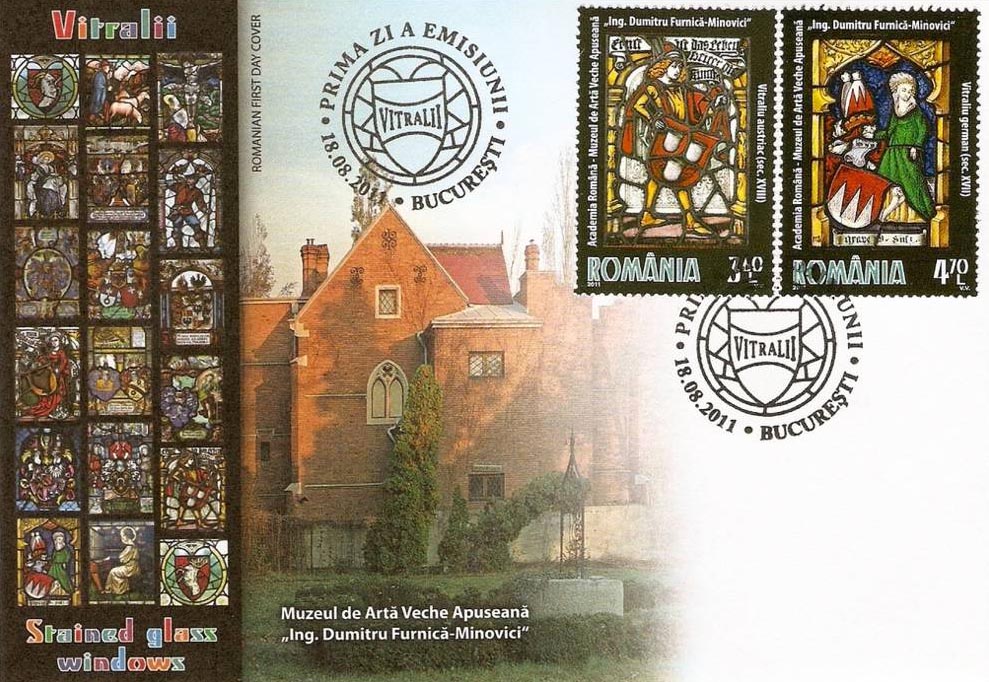
STAINED GLASS WINDOWS – “Eng. Dumitru Furnica-Minovici” WESTERN OLD ART MUSEUM

Designer:  Vlad Vamasescu

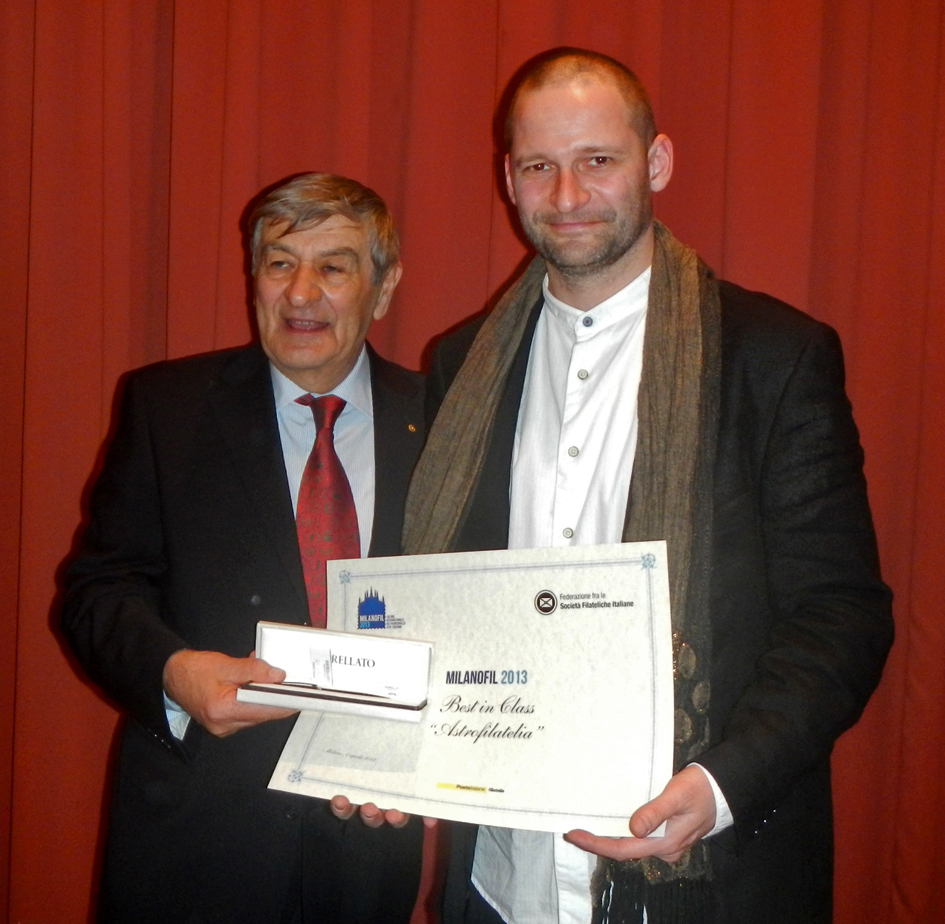
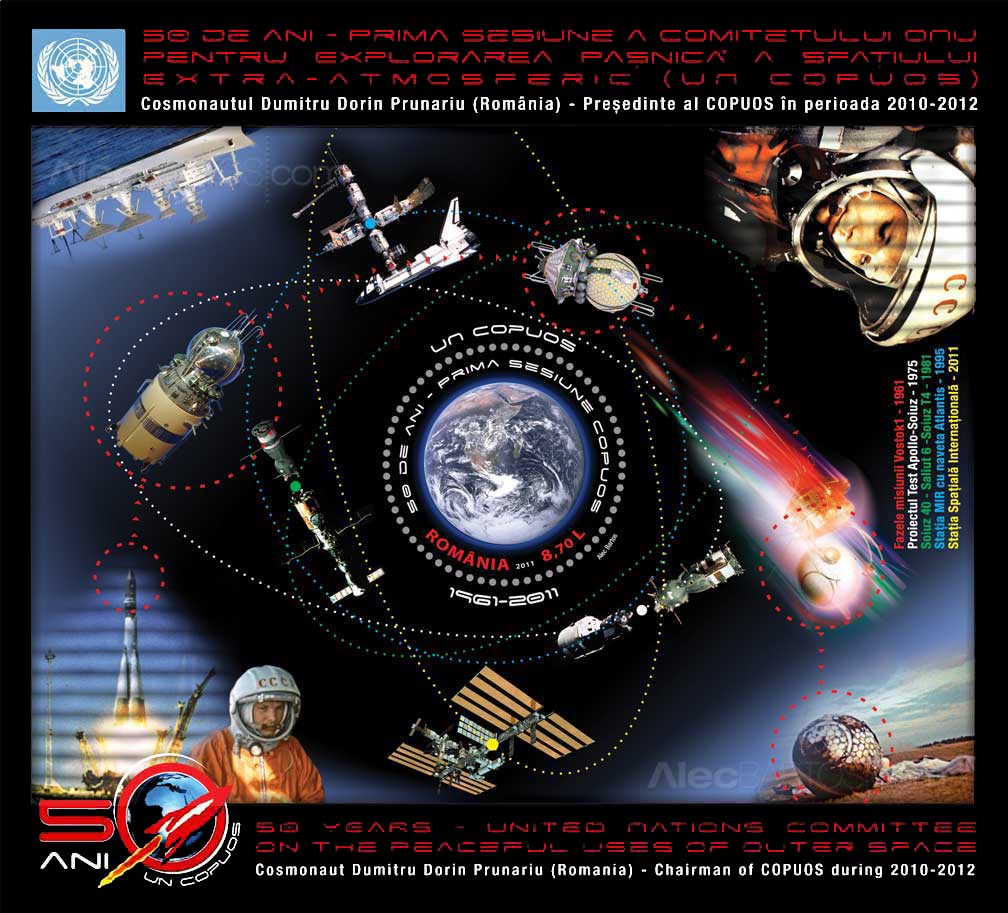
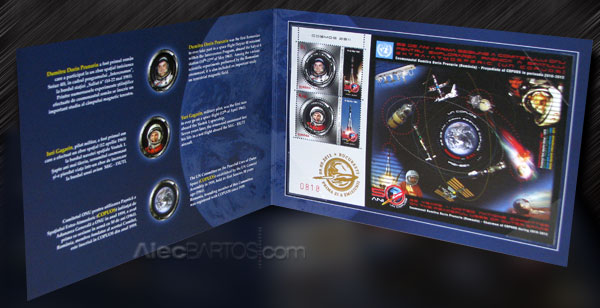
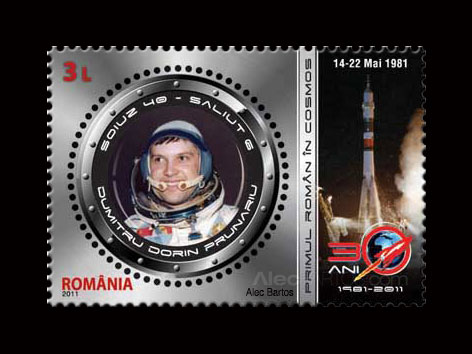
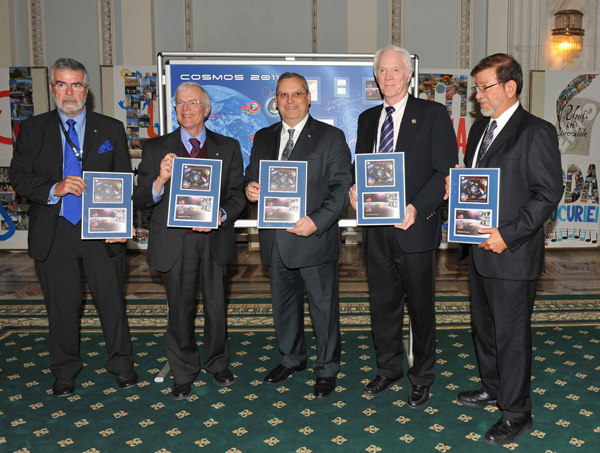
The 2nd place was awarded to Alec Bartos for his exceptional design of the COSMOS 2011 souvenir sheet.

Dumitru Dorin Prunariu

The complete “COSMOS 2011″ stamp issue – images, technical characteristics and other details here.


3rd place
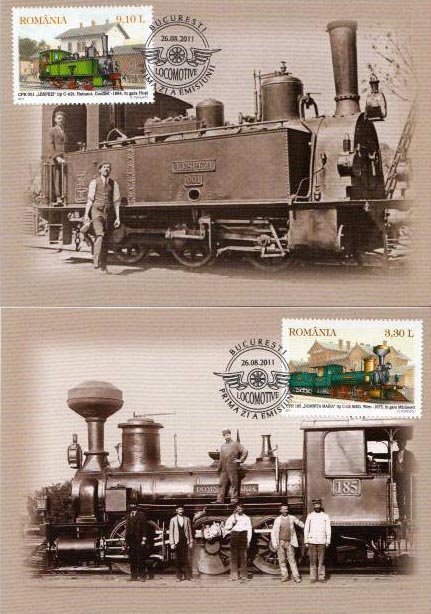
LOCOMOTIVES

Designer: Razvan Popescu

Article source:  http://www.romfilatelia.ro/noutati/comunicatepresa.php?ContentID=423


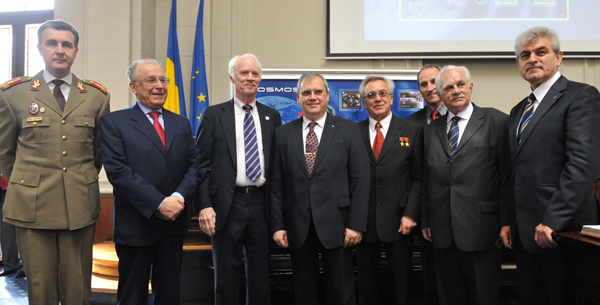
Related to the Cosmos 2011 stamp issue see: postage stamps issue COSMOS 2011 presented at the Romanian Academy 13.05.2011

IAA 2011 Planetary Defense Conference -  introducing into circulation the postage stamps Cosmos 2011My latest stamp design presentation


Search Continues for Secret Stamp Honoring John Glenn’s Historic Spaceflight – by Robert Z. Pearlman, collectSPACE.com Editor

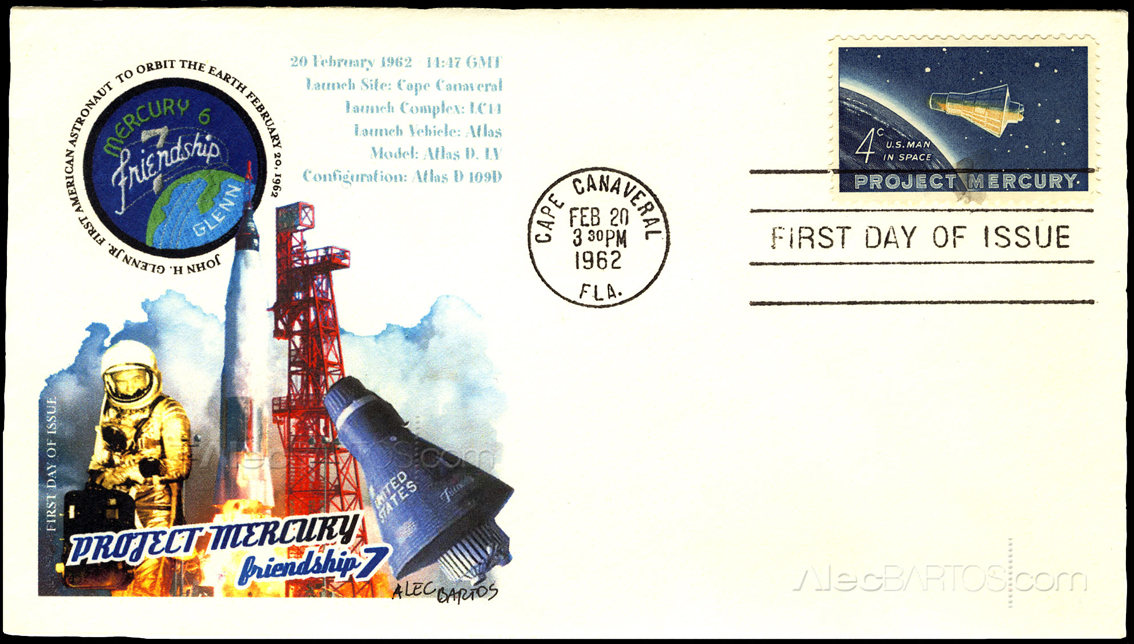
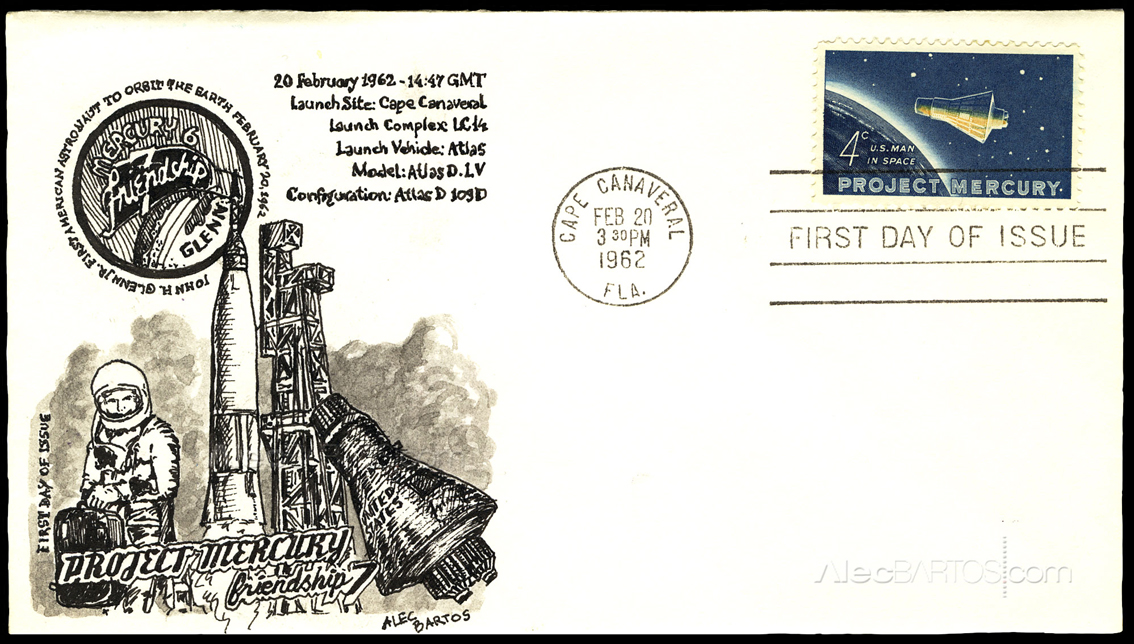
The 1962 4-cent “Project Mercury” stamp marked the first time that the U.S. issued a previously unannounced commemorative stamp at the same time as the event it was issued to honor. (cS)

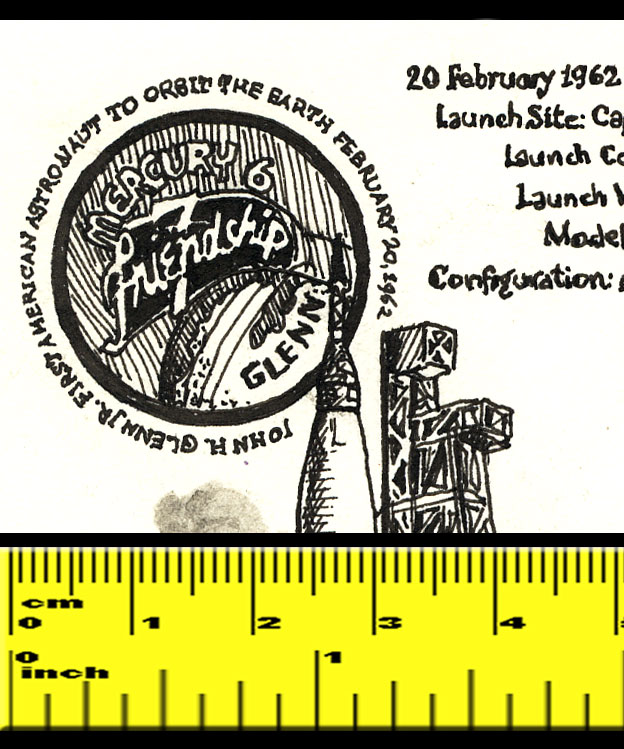
The above cover was cancelled on the first day of issue fifty years ago. The cachet designs is made by me (Alec Bartos) in 2008 in an tirage of only two coves. As a custom commissioned cachets for Mr. Ben Ramkissoon. I have remade the cachet handmade. See below:
February 20, 2012– Fifty years ago Monday (Feb. 20), John Glenn, the first American to orbit the Earth, relied on ground stations located across the planet to communicate with his control team. But after his Mercury spacecraft, Friendship 7, safely splashed down, it was another type of station that took over tracking his historic mission: U.S. post offices.For the first and only time in the country’s postal history, the United States Post Office Department — since 1971, the U.S. Postal Service — surprised the public with the release of a secret stamp celebrating Glenn’s successful mission. The 4-cent “Project Mercury” postage stamp was revealed and immediately put on sale in 305 post offices within an hour of Glenn’s triumphant return to Earth at 2:43 p.m. EST (1943 GMT) on Feb. 20, 1962. Half a century later, collectors are still searching for those first-day-of-issue stamps.
above: detail of Ramkissoon’s cover

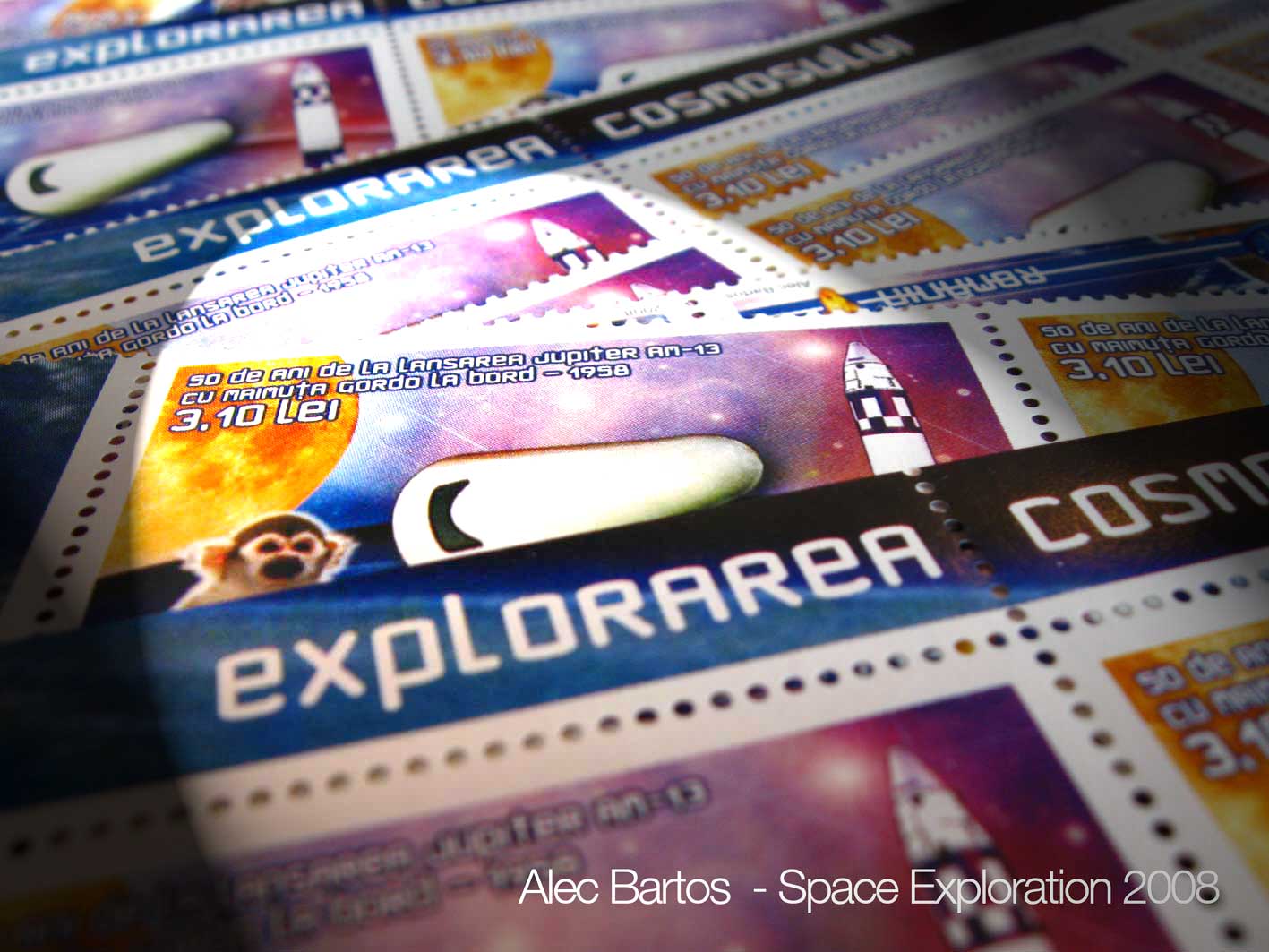
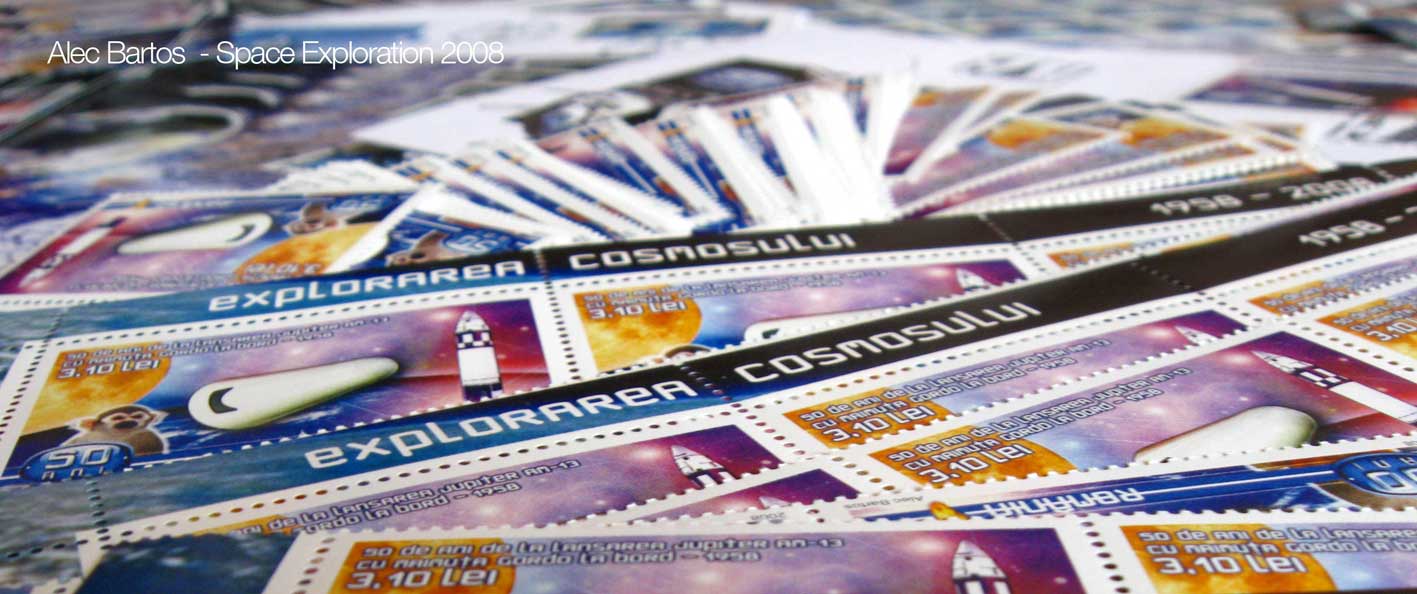
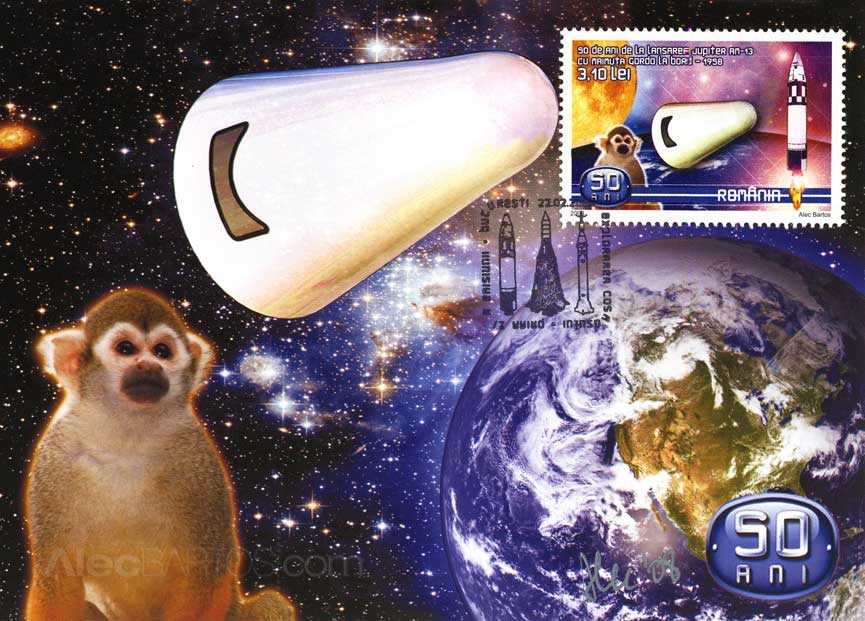
Romania – 2008 – “Space Exploration” stamp issue – design Alec Bartos

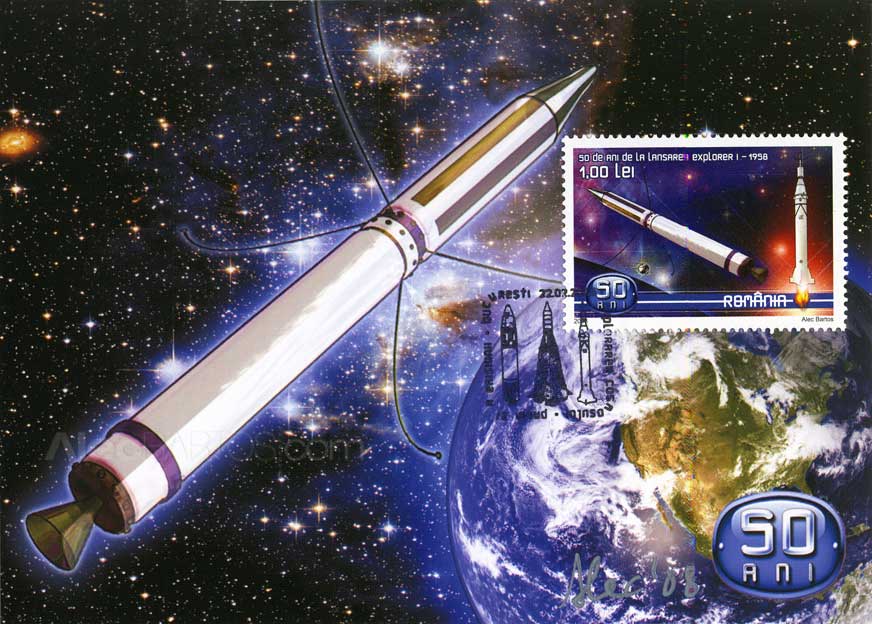
In 1958, the United States of America launched the first space mission, Explorer I that was to reveal a fundamental discovery for space explorations: due to its magnetic poles, the Earth is surrounded by a radiation belt, thereafter called “Van Allen”.
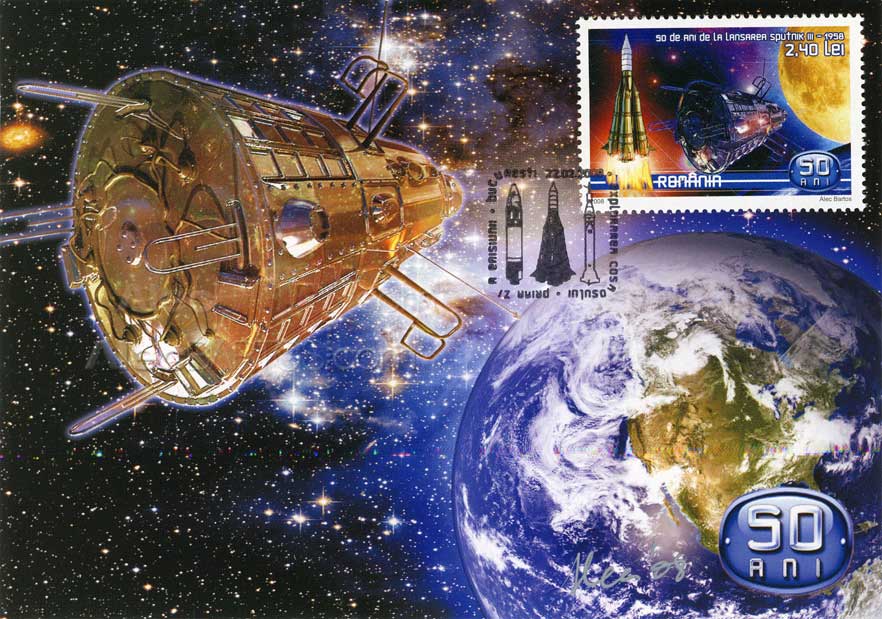
The Sputnik program implied a series of space missions no human aboard, conducted by the Soviet Union, during late 60´s and its purpose was to emphasize the feasibility of artificial satellites. The name “Sputnik” actually means “satellite” or “travel companion”. The first attempt to launch the Artificial Earth Satellite Sputnik 3 on February, 3rd 1958 was a failure but the second one, dating May 15th was a real success and managed to transport an important number of devices to be used in geophysical research into space. The magnetic recorder on board damaged and any research data registration on Van Allen radiation belts, just four months previously discovered by the American satellite Explorer I, accordingly became impossible.
In December 1958, the United States Army launched the Jupiter AM-13 missile having monkey Gordo aboard. This mission was devoted to biological research. Unfortunately, upon landing, the monkey died because of defection of the parachuting system of the missile.
The stamp with the face value of RON 1.00 presents Explorer I space mission.
The stamp with the face value of RON 2.40 presents Sputnik 3 space mission.
The stamp with the face value of RON 3.10 presents Jupiter AM-13 space mission.


Merry Christmas and Happy New Year !

CRĂCIUN FERICIT ŞI LA MULŢI ANI!!

Yeni yılınızı kutlar, sağlık ve başarılar dileriz!
С Рождеством Христовым С наступающим Новым Годом!
Natale hilare et annum faustum!
Честита Коледа Щастлива Нова Година!
Жаңа жыл құтты болсын!
חג מולד שמח ושנה טובה
Gëzuar Krishtlindjet e Vitin e Ri!
Veselé vánoce a šťastný nový rok!
Joyeux Noël et bonne année!
Feliz Natal e próspero ano novo!
क्रस्मसको शुभकामना तथा नयाँ वर्षको शुभकामना
メリークリスマス 明けましておめでとうございます
Buon Natale e felice anno nuovo!
Kellemes karácsonyt és boldog új évet!
Καλά Χριστούγεννα!
Fröhliche Weihnachten und ein gutes neues Jahr!
Prettige kerstdagen en een Gelukkig Nieuwjaar!
聖誕節同新年快樂
Cărciun hărios şi ti mulţă-anji Anlu Nàù!

Шинэ жилийн баярын мэнд хvргэе!

أجمل التهاني بمناسبة الميلاد و حلول السنة الجديدة
Merry Christmas and Happy New Year !

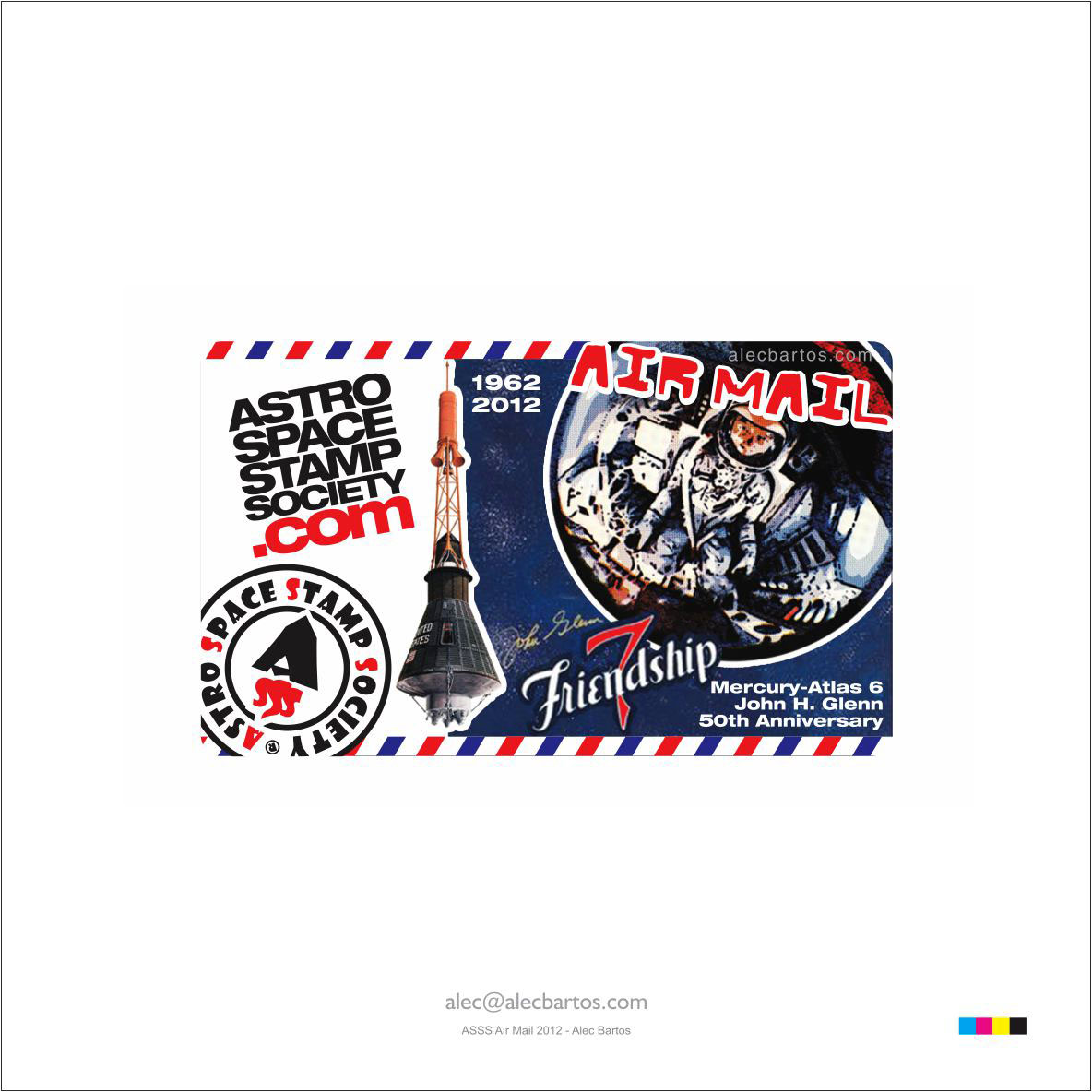
Astro Space Stamp Society – Airmail Labels – Space thematic etiquettes – Orbit magazine

ORBIT is the official quarterly publication of the Astro Space Stamp Society, full of illustrations and informative space stamp and space cover articles, postal auctions, space news, and a new issues guide.

The etiquettes have appropriate illustrations and are imperforate on gummed paper; the computerized realizations were achieved by me. Other realizations were achieved by Eve Archer, wife of Jeff Dugdale, who edits the ASSS’s journal ORBIT. (http://www.astrospacestampsociety.com/Articles02/etiquettes.html)

They are available from him, C/o Elgin High School, Elgin, Moray, IV30 3YU.The price are only £1 for 4 (it’s 25p for 4 to ASSS members) All can be postally used to indicate airmail.

Mixed media artwork – maxicard – glow in the dark effects (photoluminescent pigment) – Alec Bartos – First Step On The Moon – 2011 painting


A 70X50 cm mixed media artwork that includes a Apollo 11 maxicard designed by me in 2009 for the Romanian Post. See the full stamp issue here: http://alecbartos.com/?p=123

(In philately a maximum card (also known as a maxi-card, or maxicard) is a postcard with a postage stamp placed on the picture side of the card where the stamp and card match or are in concordance. In most cases, the cancel is also related to the image on the front of the card and the stamp.

The collecting of maximum cards is known as maximaphily.)

The work is part of an ongoing series that utilize photoluminescent pigment with a glow period of over 8 hours. The area around the stamps, blocks, postcards or envelopes, made from the spacial cardboard generally used for the passe-par-tout is used as a painting surface. Small details (visible only in a specific angle and light) made with pencils and liners, rough acrylic touch, metallic colors and the special glow in the dark pigment work together to the final composition. The idea is that at different distances to the tableau, the viewer is experiencing different paintings. The light plays a very important role. Not only for the photoluminescent pigments, invisible during the day and which without light will remain near invisible in the dark, but for all the other materials used. Many of the details are made almost black to black. They become visible only in a éclairage rasant or with the help of the reflections of light. All these made the tableau interesting to see for-yourself and not so spectacular when photographed.

Graphic design posters for Purdue University – Bioethics Lectures Series

For the past six years Jonathan Beever and Nicolae Morar, with the support and encouragement of their sponsors, have continued to press the issue of ethics in policy, science and technology at Purdue via the Lectures in Ethics, Policy, and Science (formerly the Bioethics Seminar Series). They intend to build opportunities for engagement between philosophy, policy, and science at a campus-wide level and to raise awareness of the ethical implications of biotechnological development for our environment both local and global. Hosting nationally-recognized scholars brings new perspectives to the Purdue community on these issues. Their objectives for the bioethics seminar series project included the following.

1) Develop interdisciplinary discourse on “hot” issues in science and ethics

2) Educate for intentionality in science and technology development at Purdue

3) Establish connections between Purdue’s science and technology and Indiana University’s Center for Bioethics

4) Involve philosophy in policy and ethics decisions at a campus-wide level

5) Build opportunities for engagement

6) Broaden our scope to include issues of climate change in discussion of bioethics

7) Involve nationally-recognized scholars in diverse discussions of bioethics

Jonathan Beever

August 2011


I had the opportunity to help them with the design of the posters.

more at: http://www.purdue.edu/bioethics/

Return top